SwivelCut
Cardboard Made Even Easier
Technical
CAD, Rendering, Rapid Prototyping, User Research, Technical Drawings, Videography, DFM/DFA, User Testing
Transferable
Project Management, Organisation, Communication, Teamwork
The Brief
The brief asked us to identify an underserved user group and design for a genuine, overlooked need. That search led us to Design and Technology students in UK secondary schools, a group whose subject is in real decline: GCSE DT entries have dropped 63% since 2014, one of the steepest declines of any major subject, and specialist DT teacher numbers have fallen 52% since 2012. Yet the skills DT builds are exactly what industry is short of, 76% of engineering employers report struggling to find technical skills when recruiting. This made DT students a clear underserved group worth designing for.
The Problem
To find the specific gap within DT, we ran 11 interviews across two contrasting schools and a 92-response survey. The findings pointed to low-fidelity cardboard prototyping as a recurring weakness: craft knives were seen as the most dangerous tool in the workshop, 65.2% of students reported minor cuts or burns, and 41.2% specifically struggled to cut curves and complex geometries accurately by hand. The existing alternatives didn't close this gap either, the ChompSaw is safe but produces rough, inaccurate cuts, and laser cutters are accurate but expensive, intimidating, and require CAD skills many students don't have yet.
This left a clear gap: schools needed a tool safer than a craft knife, more accurate than a ChompSaw, and simpler than a laser cutter.
Survey
Survey
of students report minor cuts and burns within the workshop
Survey
- 35% Students who found modelling useful but frustrating
- 36% Students who disliked modelling and found it time consuming
- 29% Students who liked modelling
Concept Development
The original Term 2 concept used a mechanically-linked input arm that replicated hand movement directly onto a cutting arm. After review, the problem was redefined: rather than simply copying hand-drawn shapes, SwivelCut needed to support the whole cardboard prototyping process: how students input ideas, how accurately it cuts, and how safely and independently they can use it.
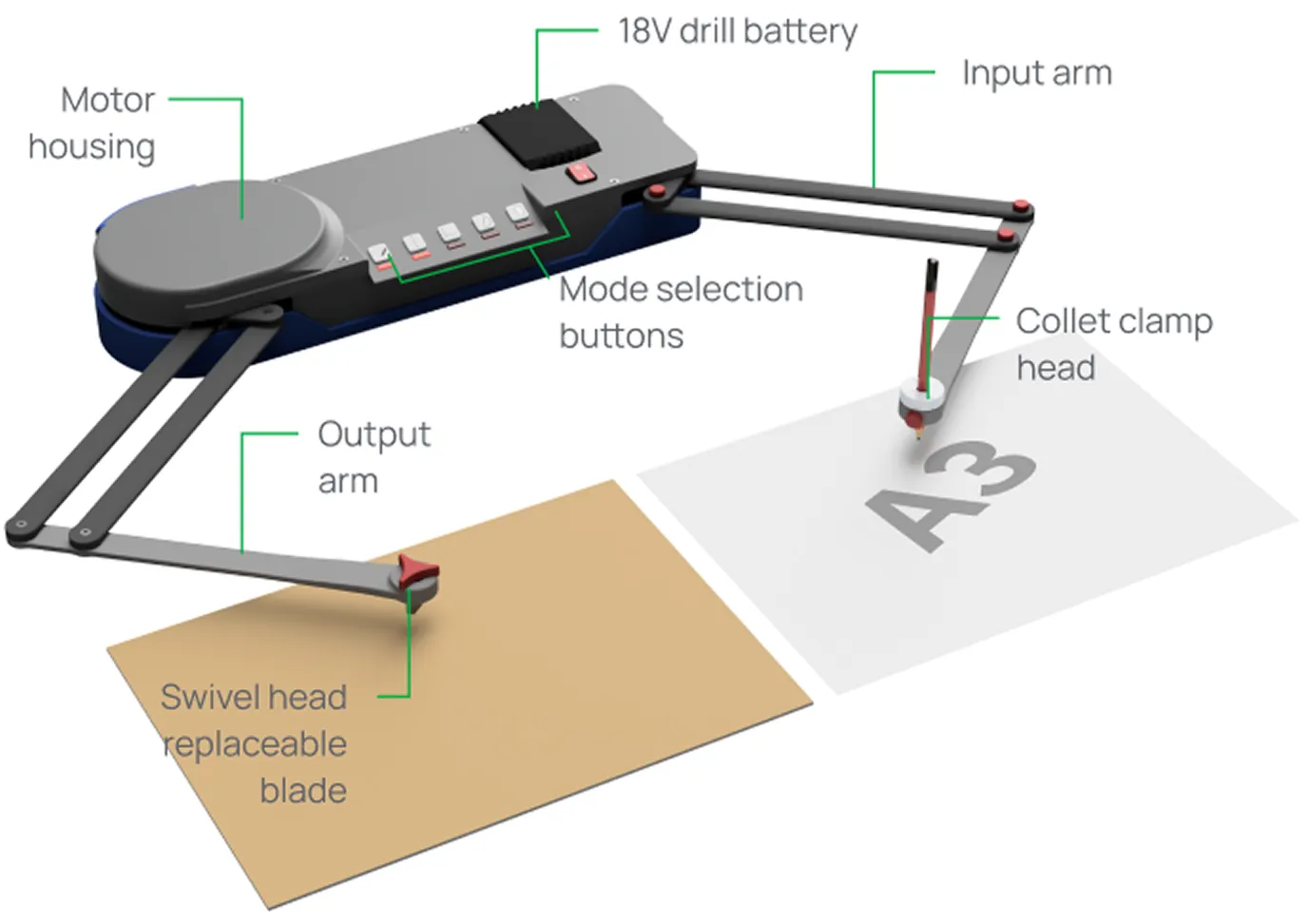
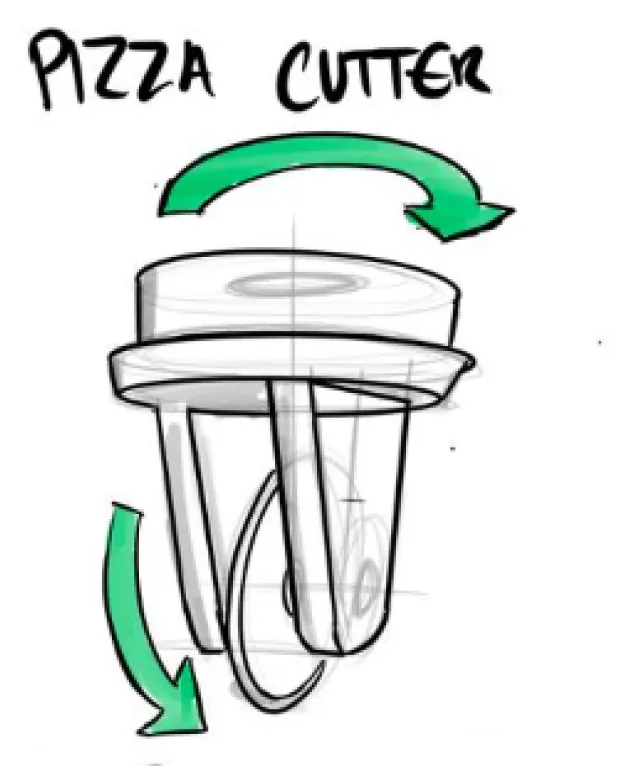
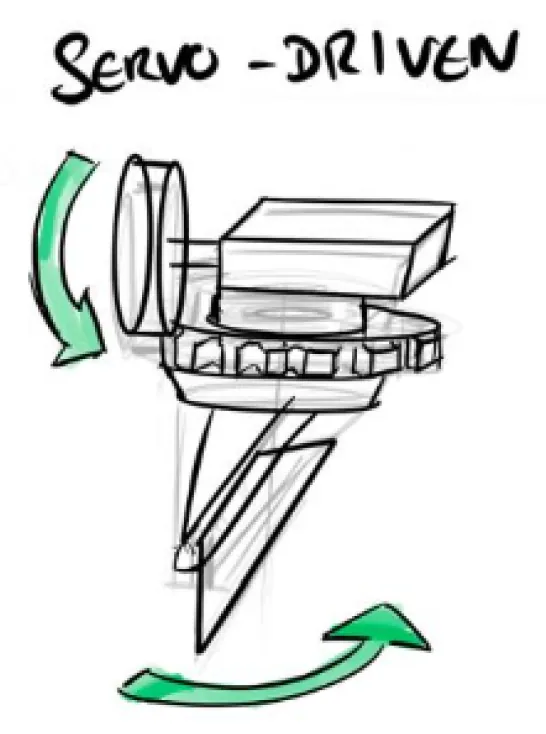
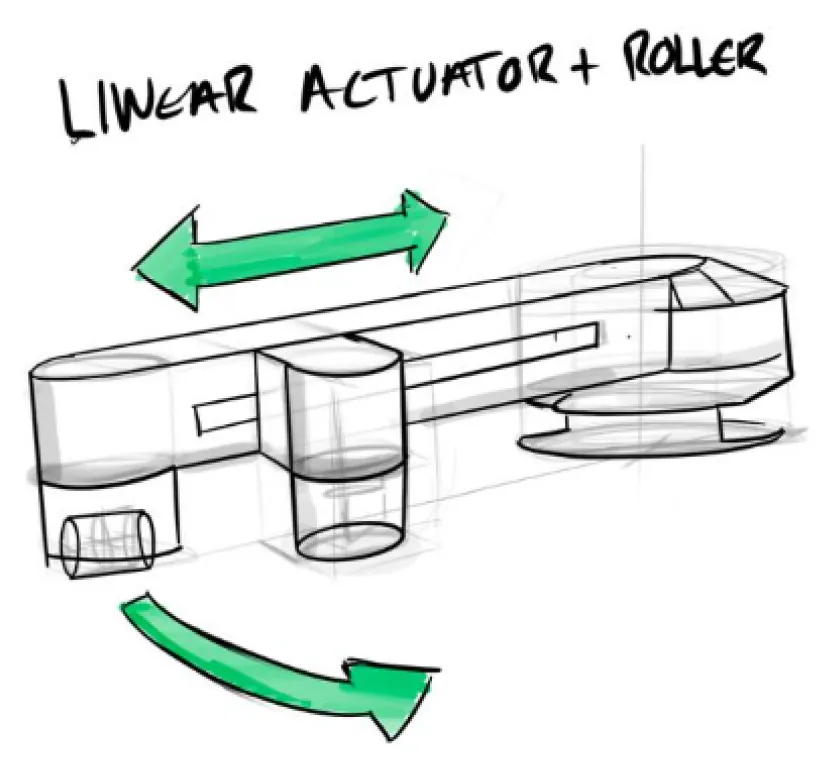
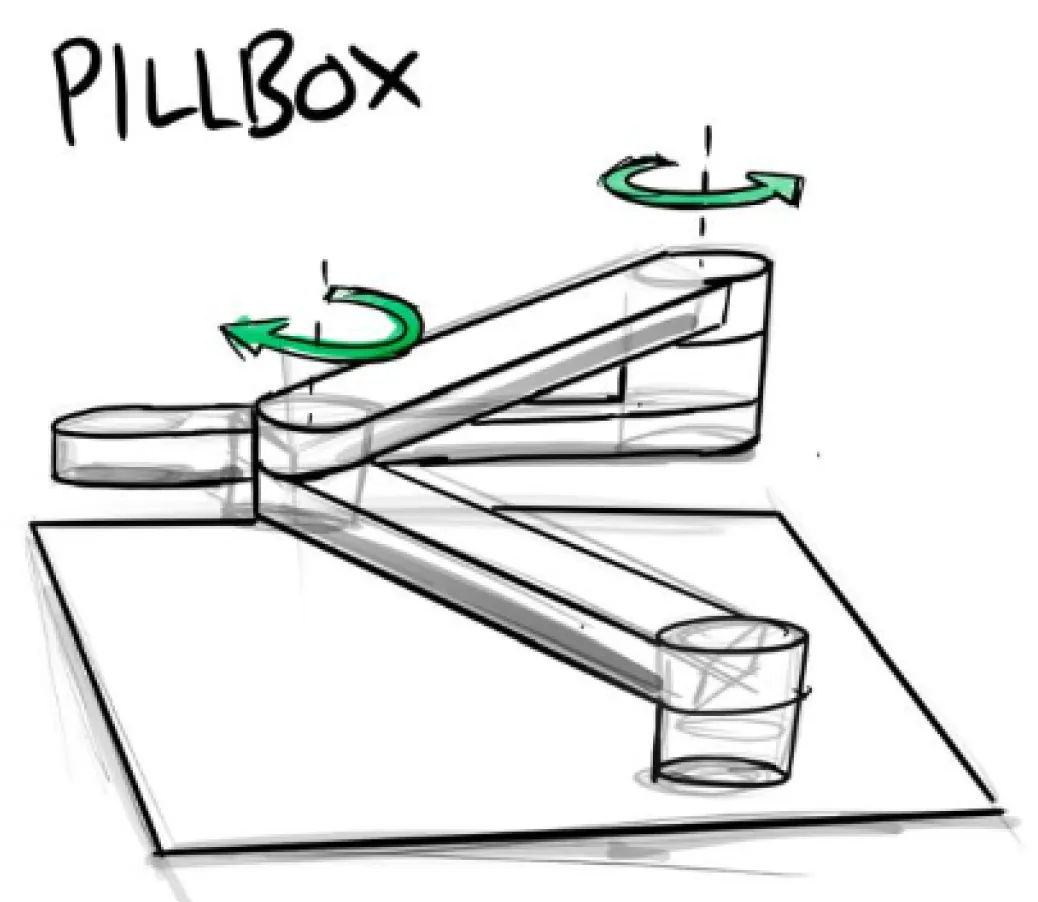
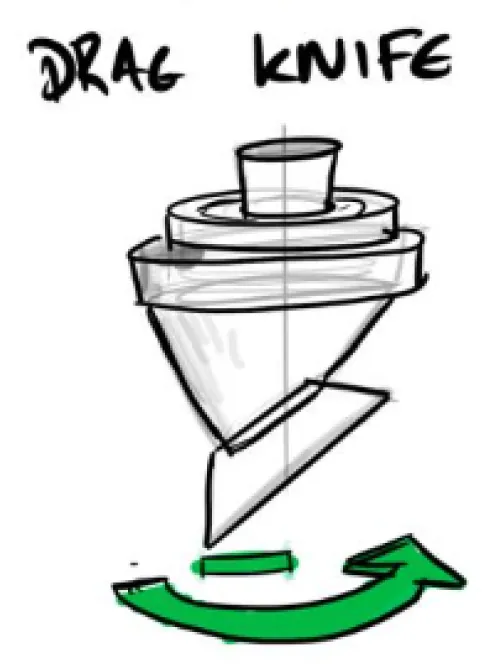
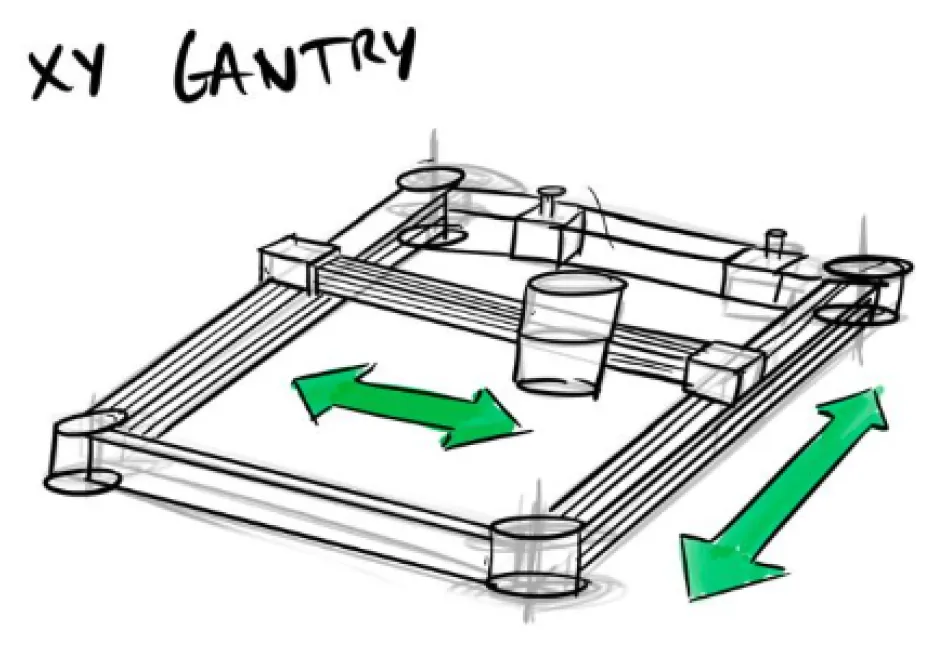
A morphological analysis explored options across cutting method, movement system, input method, feedback, and safety. A drag-knife 2DOF flat arm was selected over a 4-bar linkage (too inflexible), an XY gantry (too large and intimidating), and a moving robot, offering the best balance of compactness, visibility and cardboard-cutting suitability. Hand tracing was chosen as the input method over CAD upload or button control, since it kept the system accessible without sacrificing simplicity.
Engineering & Force Testing
Force testing shaped nearly every mechanical decision in the cutting head, from blade mounting to spring selection. Two custom rigs measured piercing and drag force directly, while a suspension mechanism was iteratively refined against the results.
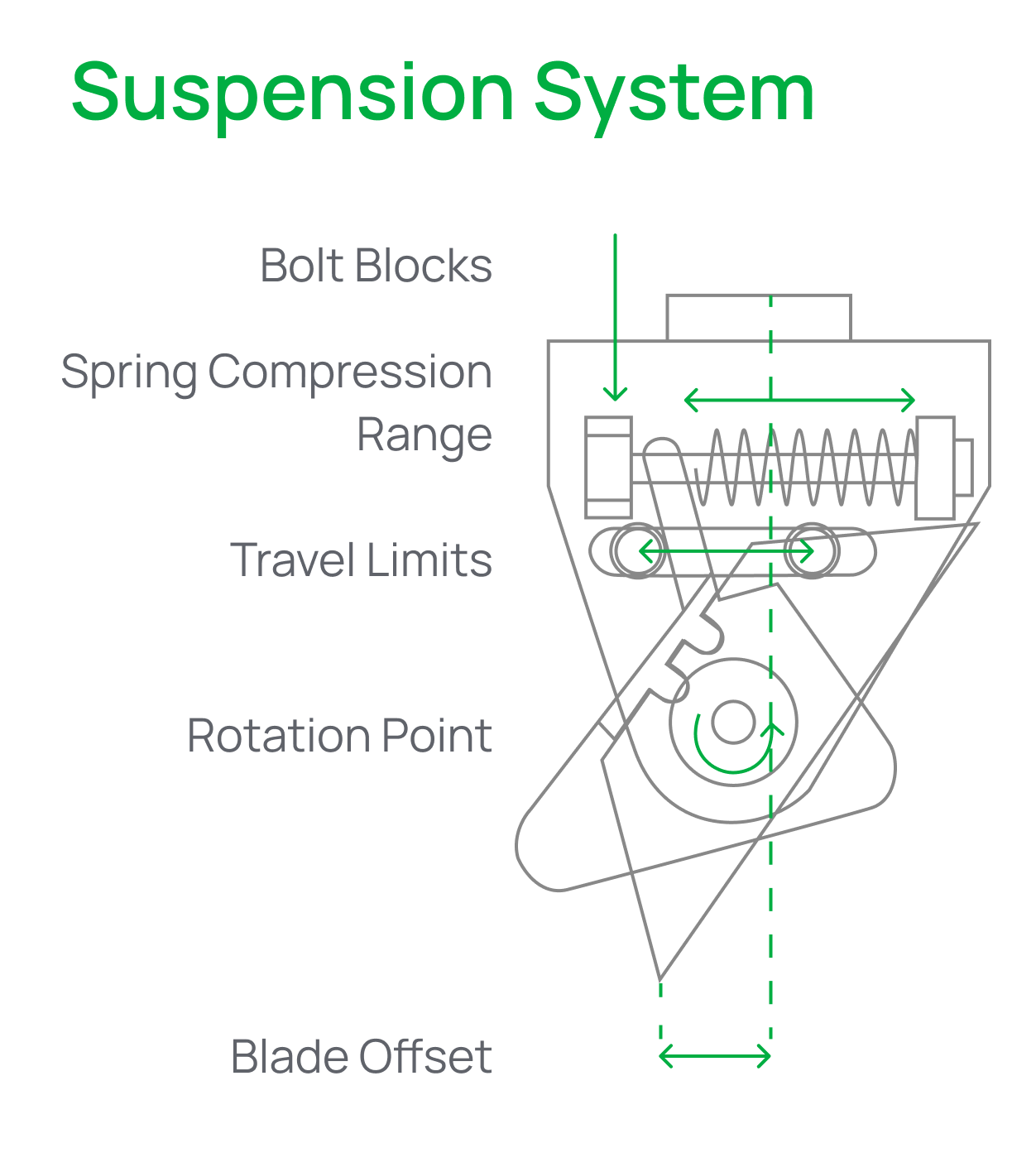
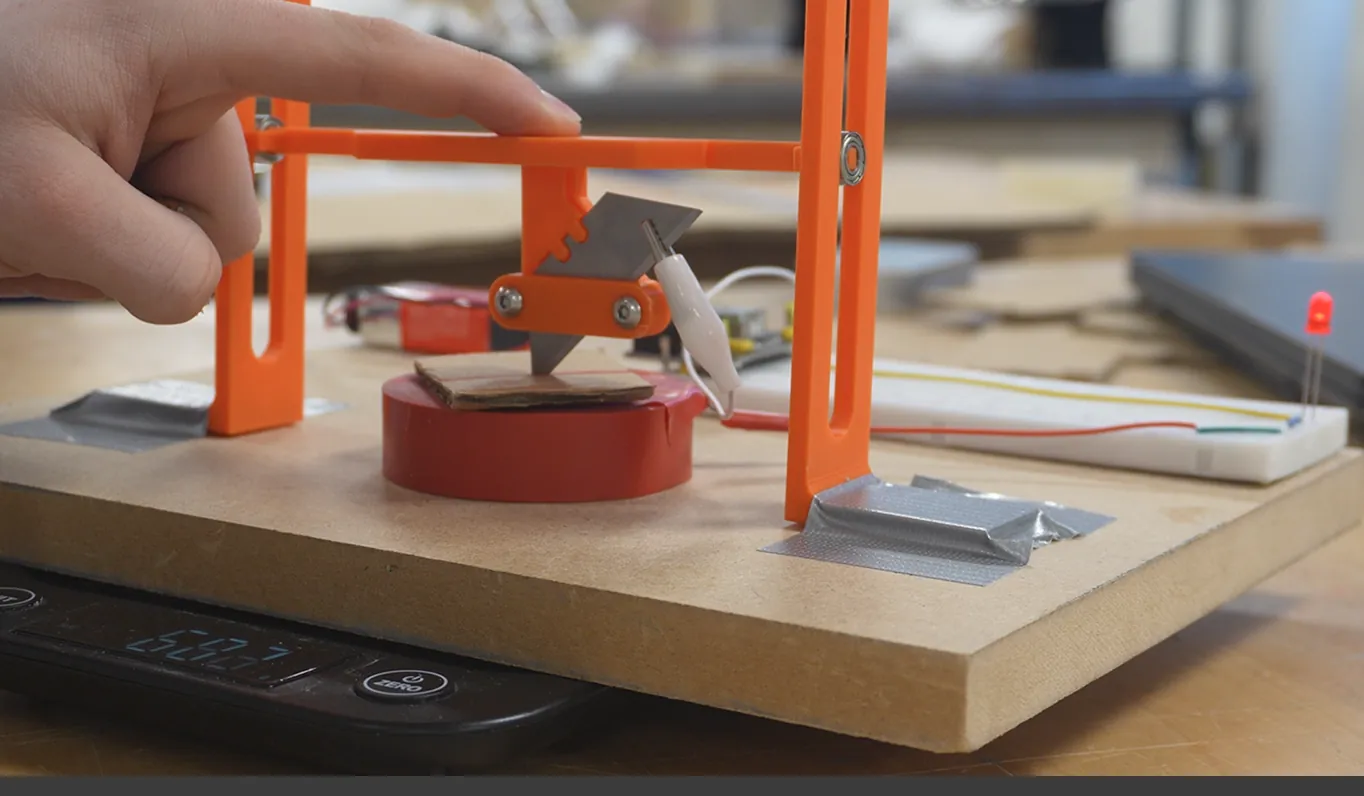
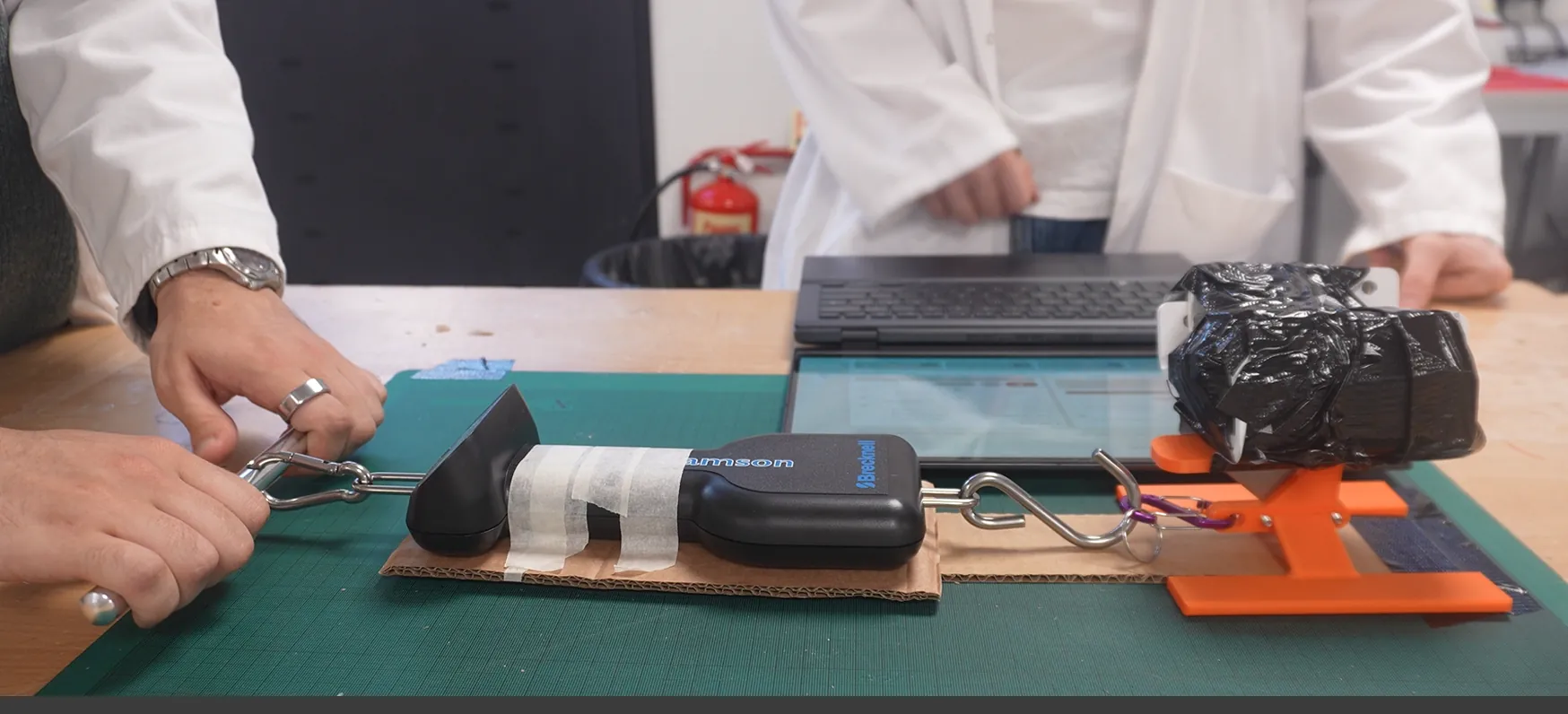
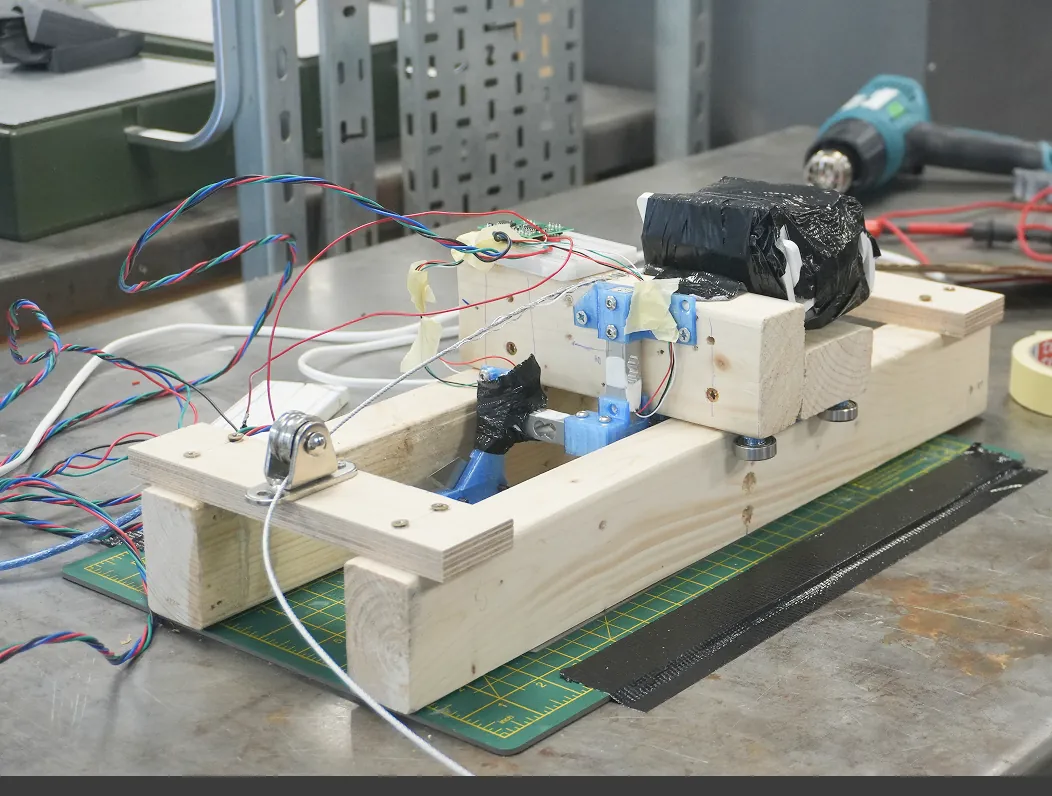
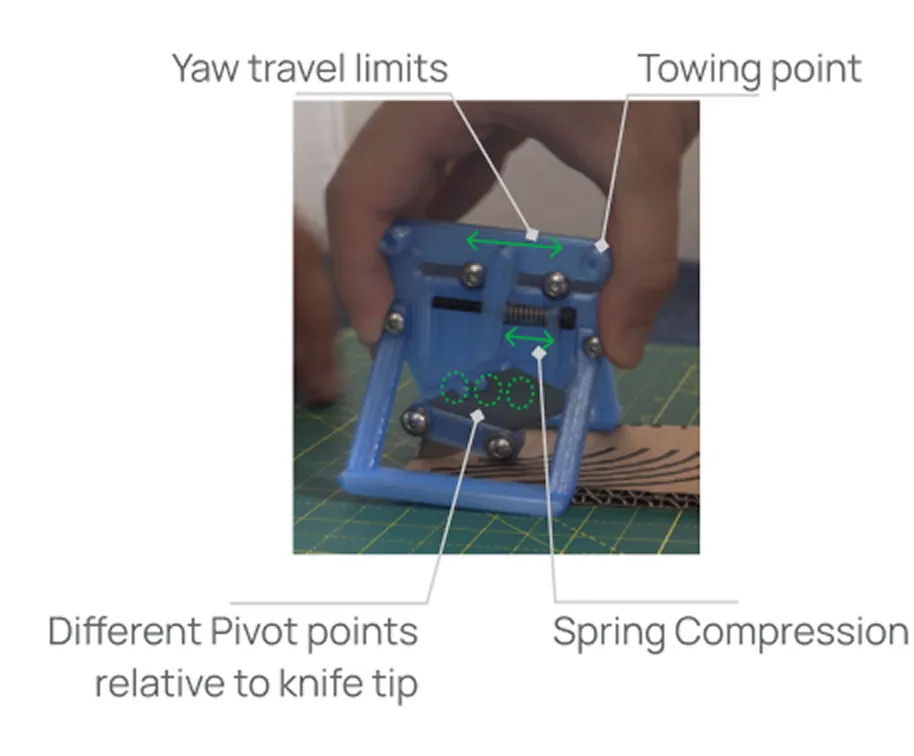
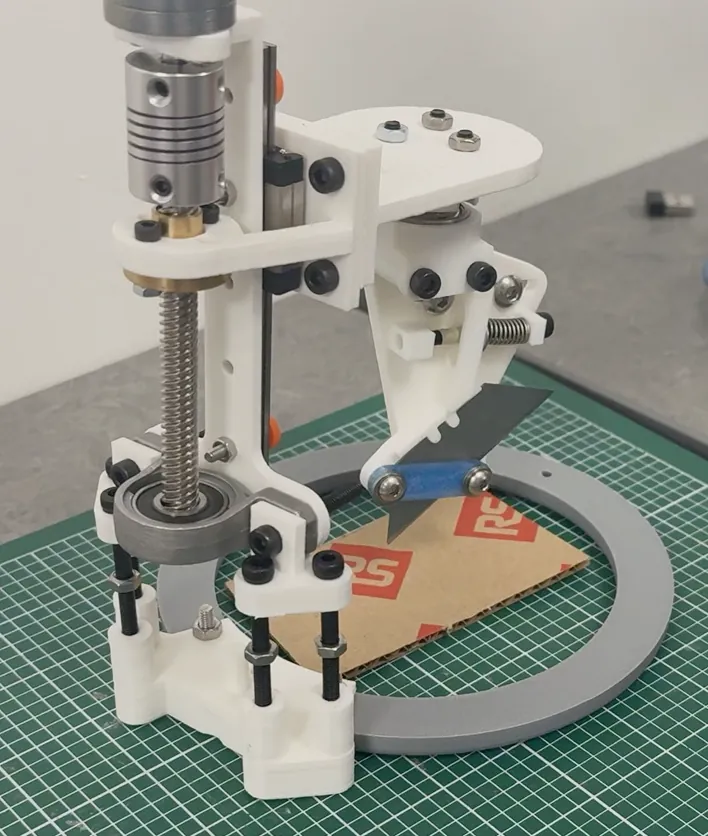
A custom test rig measured piercing force using a digital scale and conductive-plate circuit, ten tests gave a typical piercing force of 8N. Drag force testing revealed the blade depth was extremely sensitive: small variations in height could increase drag force fivefold. A trailing-arm blade mount was developed to let the blade rotate under resistance, and a test rig comparing pivot positions and spring stiffness reduced maximum drag force from 28N to approximately 8N, a 71.4% reduction, while producing consistent results cutting with or across the cardboard corrugation.
- 8Ntypical piercing force
- 71.4%reduction in max drag force
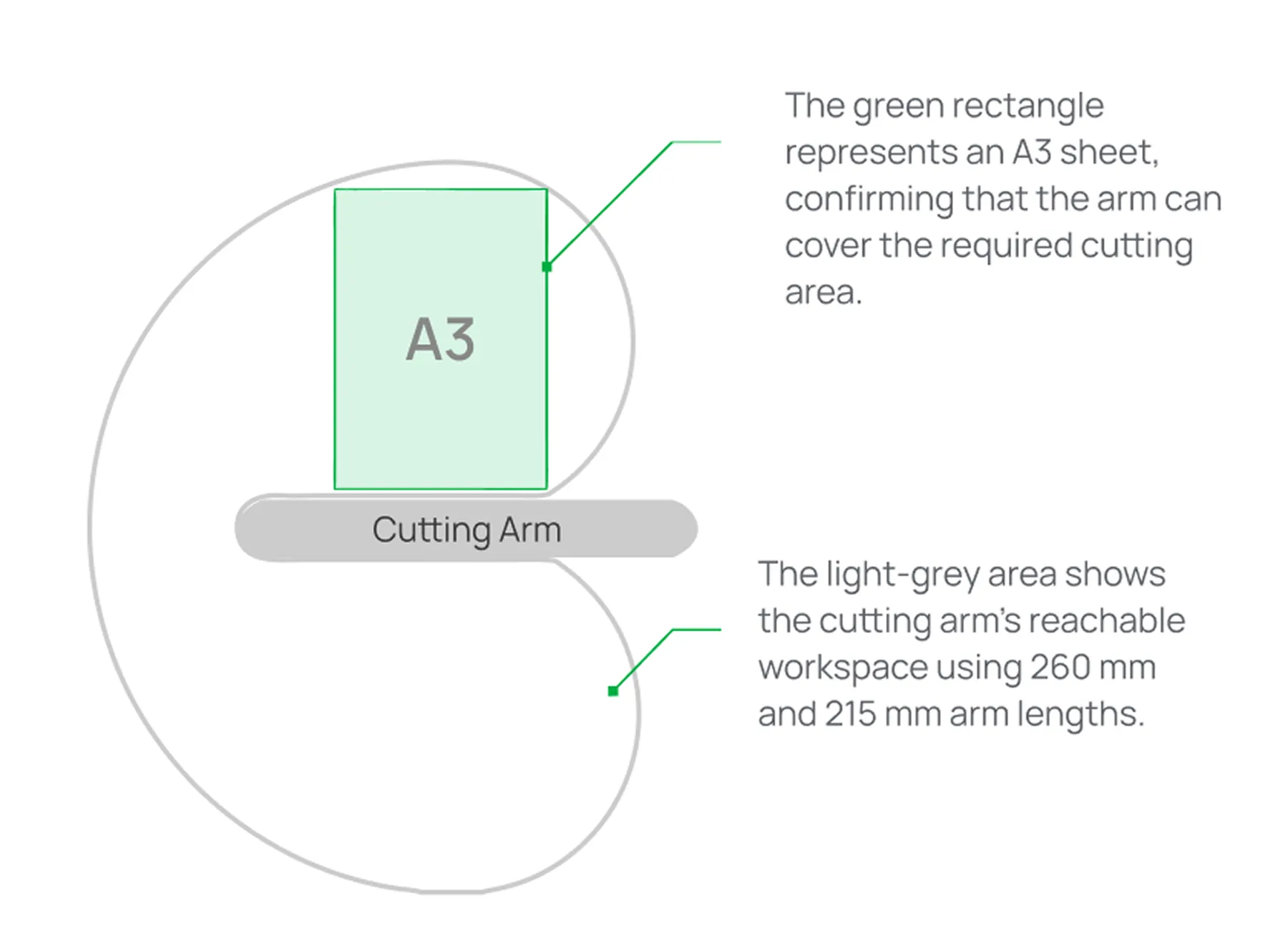
- ±1mmtarget path accuracy across an A3 workspace
Branding Considerations
Branding was part of the brief from the start, not an afterthought once the product existed. We compared several 3D printing and cutting brands, Bambu Lab, UltiMaker, Glowforge and Cricut, and chose Bambu Lab as the strongest reference: positioned between hobbyist and professional use, balancing affordability, innovation and student-friendly operation, exactly the middle ground SwivelCut needed to occupy. Procurement interviews with DT staff at two schools confirmed this, both had recently switched to Bambu Lab for its lower cost and easier maintenance.
This decision shaped nearly every design choice that followed: a white, grey and green palette, rounded forms, and an enclosed mechanism echoing Bambu’s own products, covered in more detail below.
Final Design
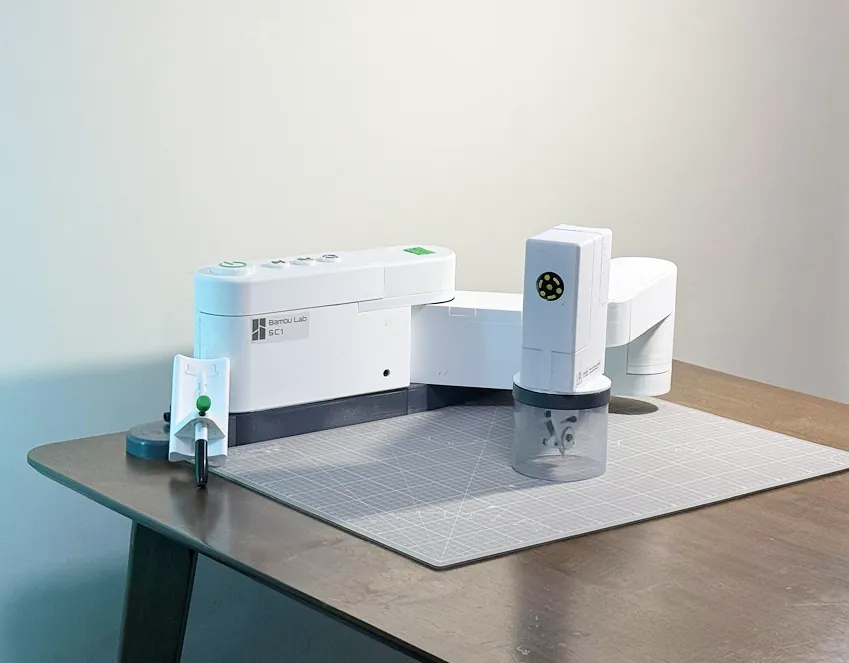
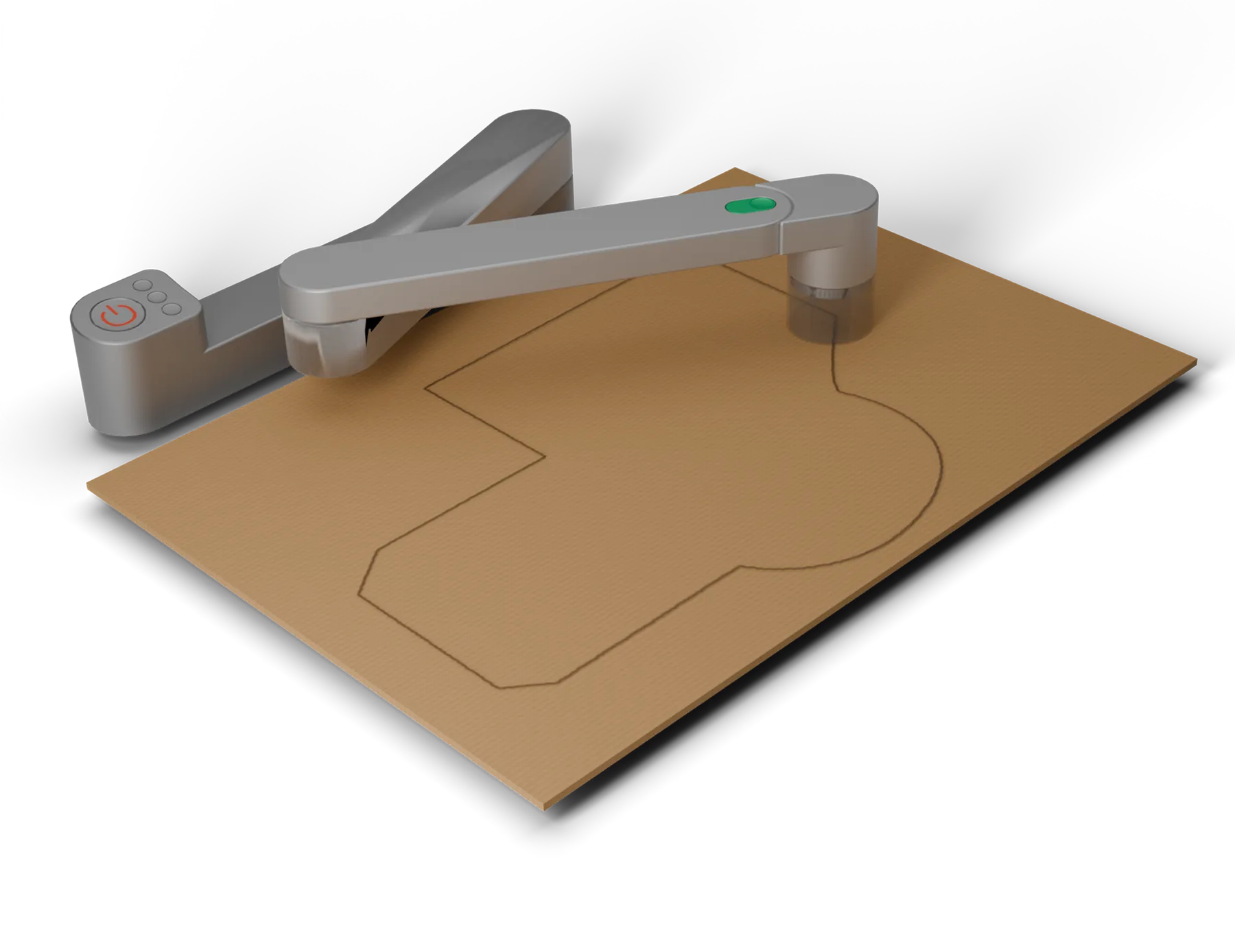
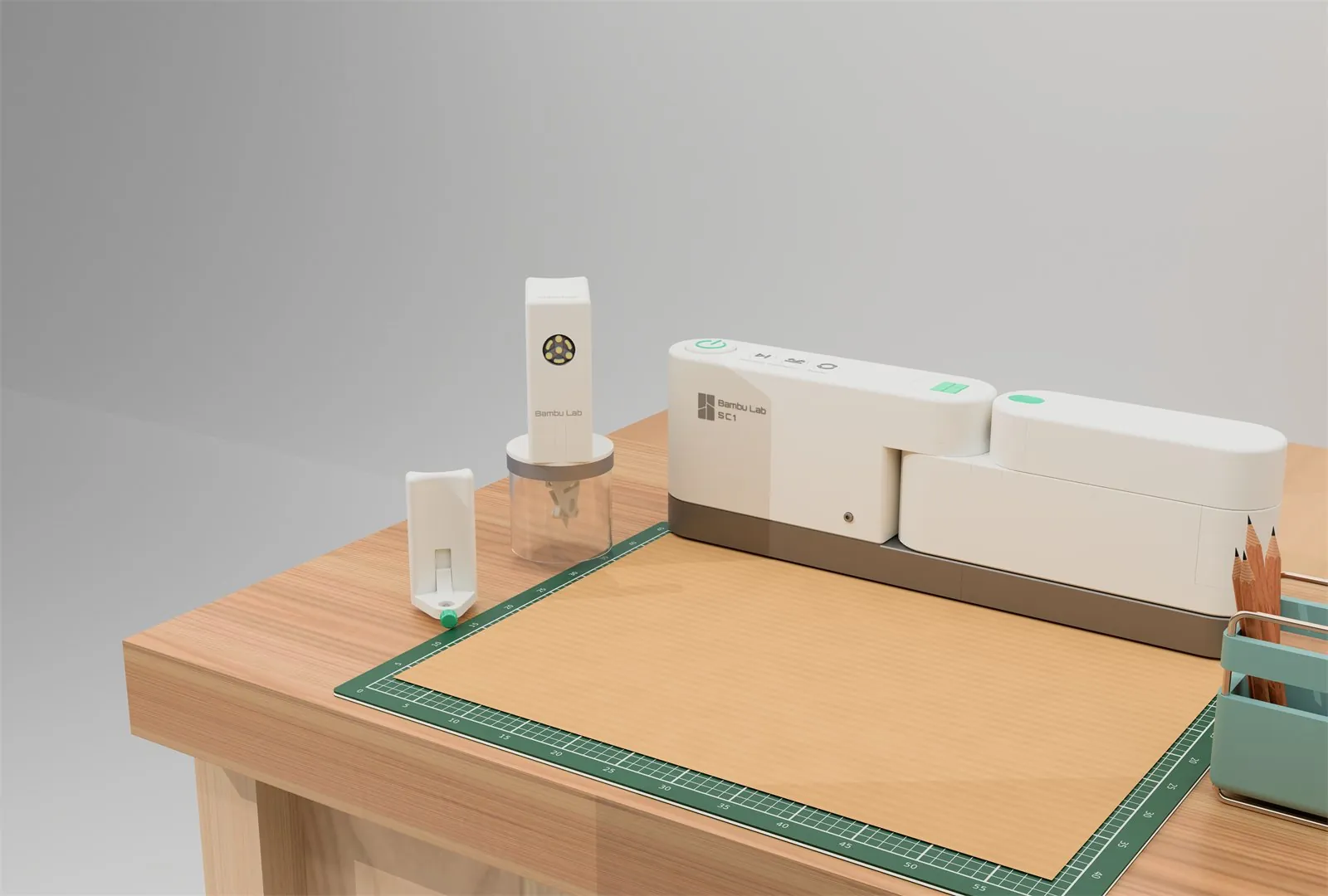
SwivelCut SC1 is a compact, two-degree-of-freedom cardboard-cutting system. Users record a hand-drawn path with the tracing head, then reproduce it safely and accurately using the powered cutting head. The design language deliberately echoes Bambu Lab's own products: rounded edges, a protective cone inspired by enclosed printer doors, Bambu green marking every touchable component, and a spinning indicator disc adapted from the Bambu A1, making an unfamiliar classroom tool feel immediately recognisable and non-intimidating.
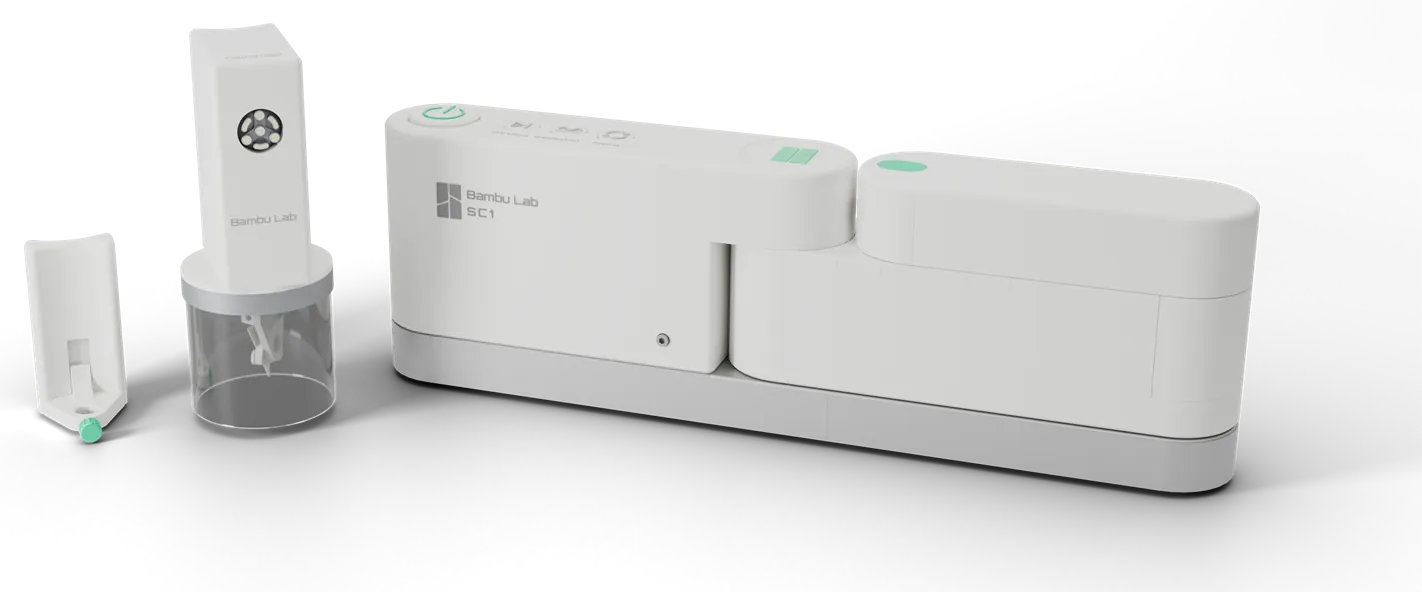
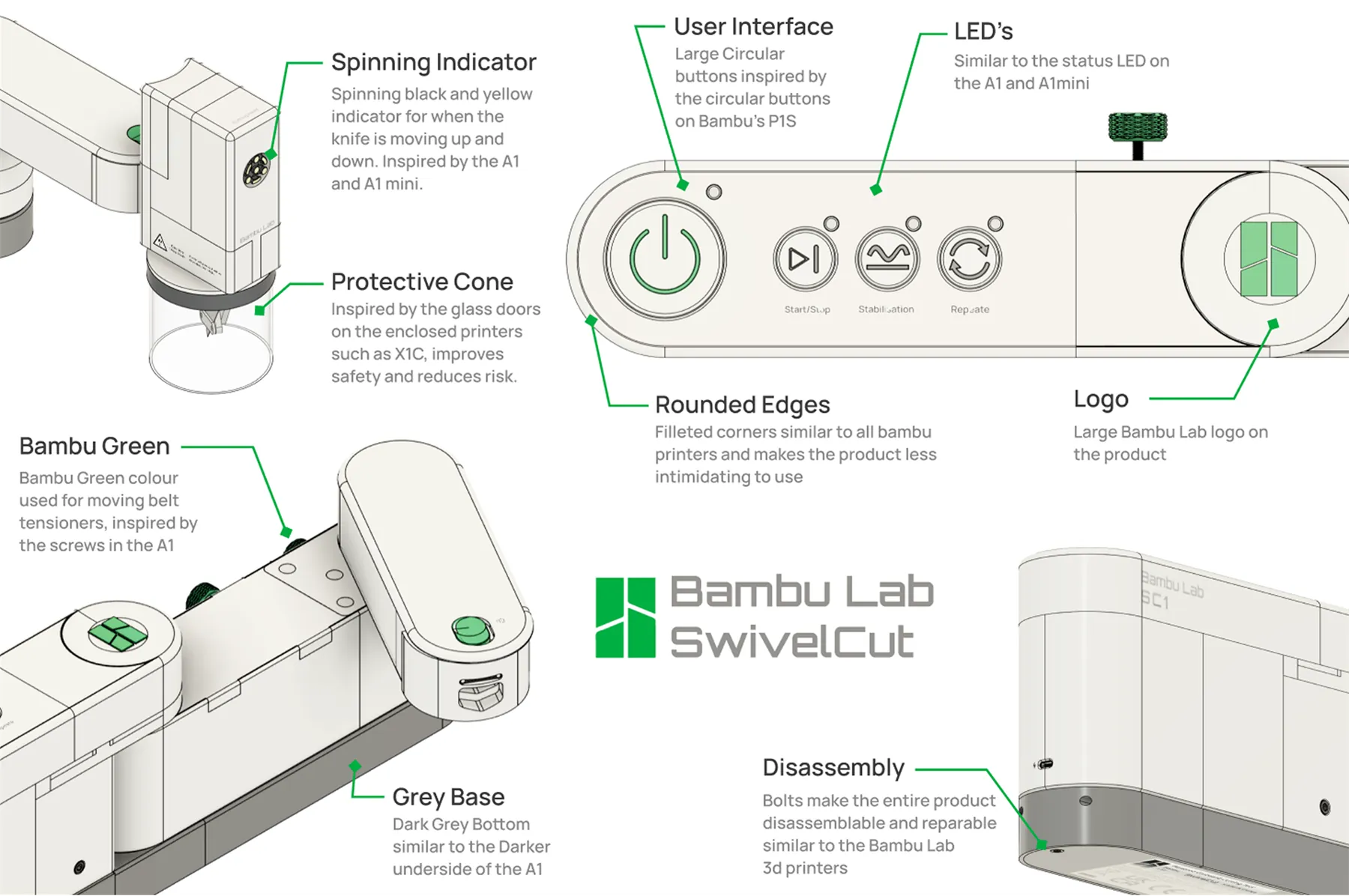
The four brand values translated directly into physical design decisions: a white, grey and green palette echoing Bambu’s own products, rounded edges to feel less intimidating in a classroom setting, a protective cone inspired by the enclosed doors on Bambu’s printers, and a spinning status indicator adapted from the Bambu A1. Bambu green is used specifically on components students are expected to touch or adjust, giving a consistent, learnable visual language for interaction.
The name follows the same logic: ‘Swivel’ reflects the two-degree-of-freedom arm, ‘Cut’ states its function, and the SC1 designation follows Bambu’s own letter-number naming convention while also standing for Safe, School, Student, Cut, Cardboard and Creativity.
Engineering Behind the Arm
Underneath its casing, SwivelCut’s arm is built from a series of precisely mounted joints and tensioning mechanisms that keep movement smooth and accurate.
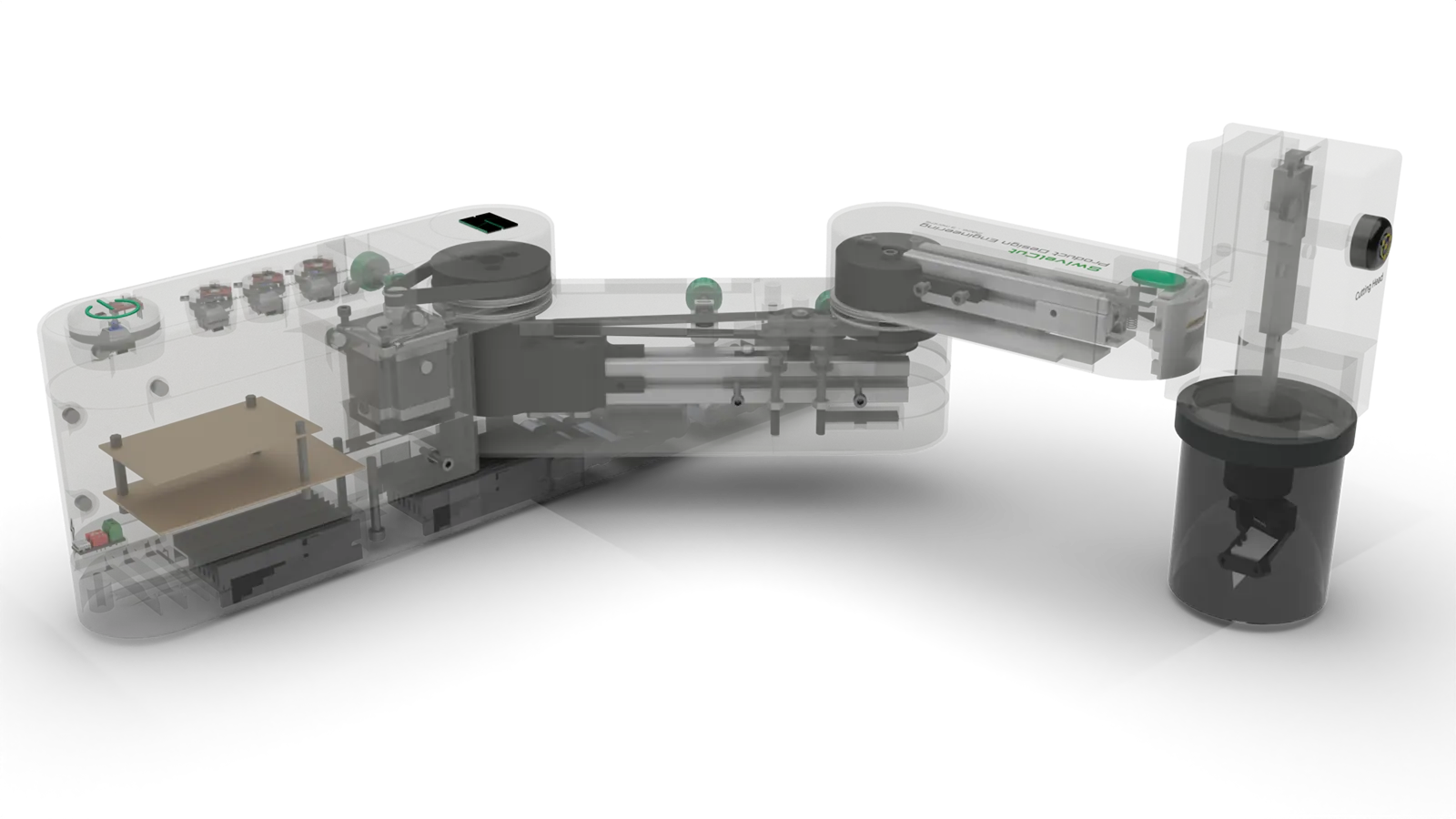
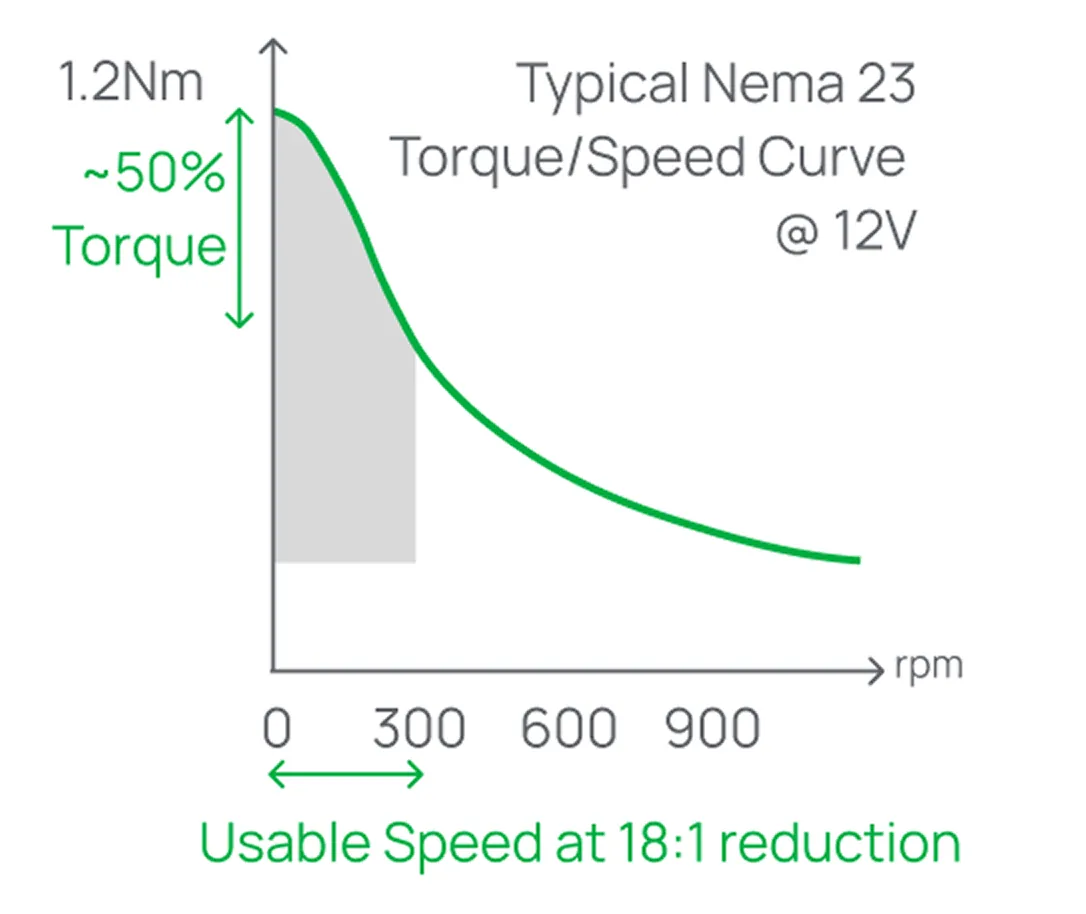
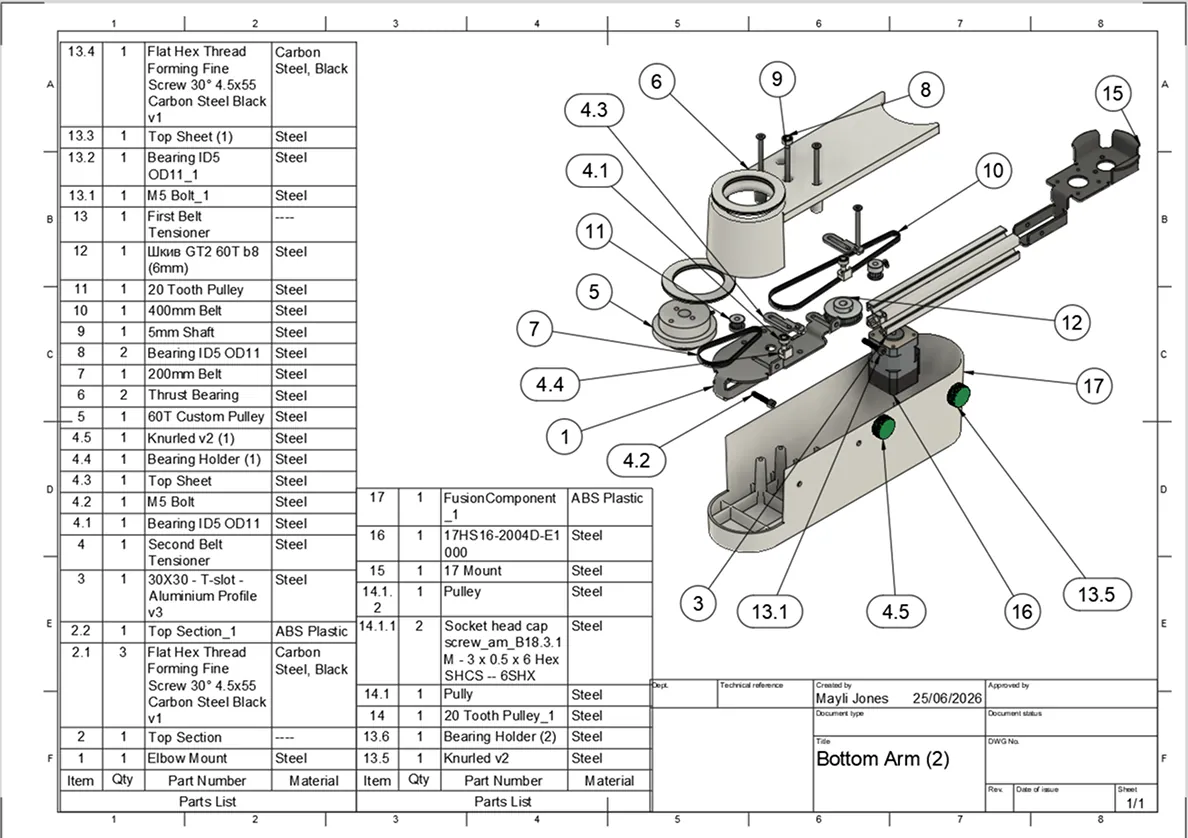
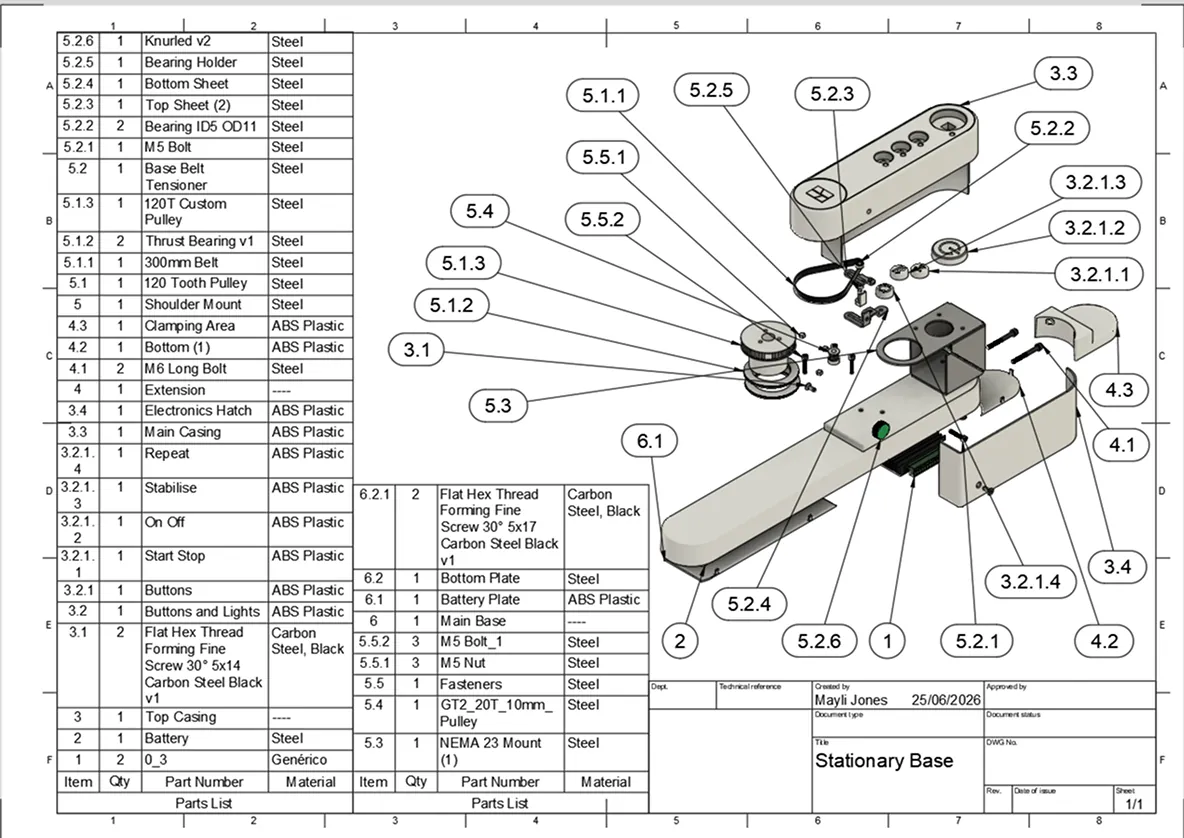
Beneath the casing, a NEMA 23 motor drives the base joint through a 1:6 pulley reduction, while a NEMA 17 drives the second joint through a compound 1:9 reduction. GT2 timing belts provide smooth, accurate movement with less backlash than the geared systems considered earlier, with separate tensioners mounted to the aluminium structure so belt tension can be adjusted during assembly. Thrust bearings support vertical loads at each joint while keeping rotation smooth and low-friction.
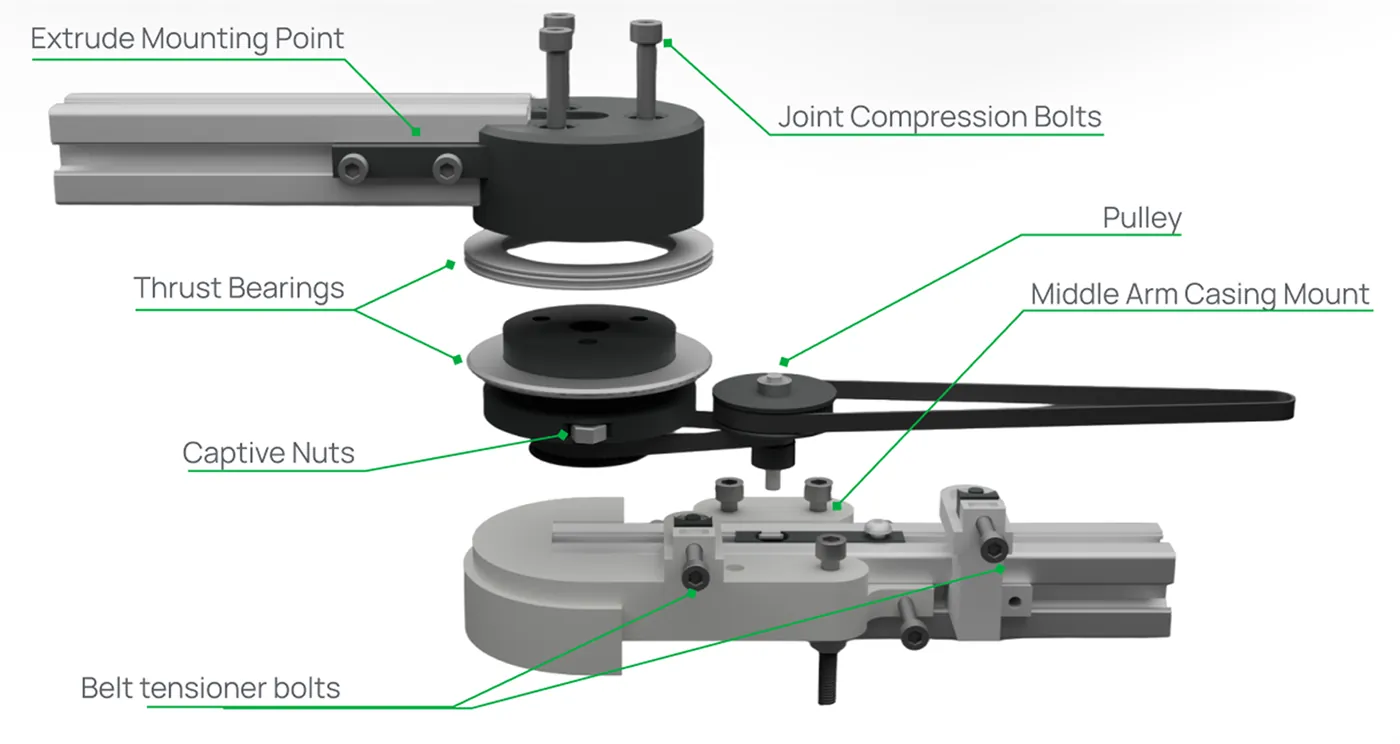
Each joint combines a pulley-driven reduction with thrust bearings, keeping rotation smooth and low-friction under load. Joint compression bolts and captive nuts secure the arm sections together, while the middle arm casing mount ties the pulley and bearing assembly directly into the arm structure, keeping the joint rigid even as it moves.
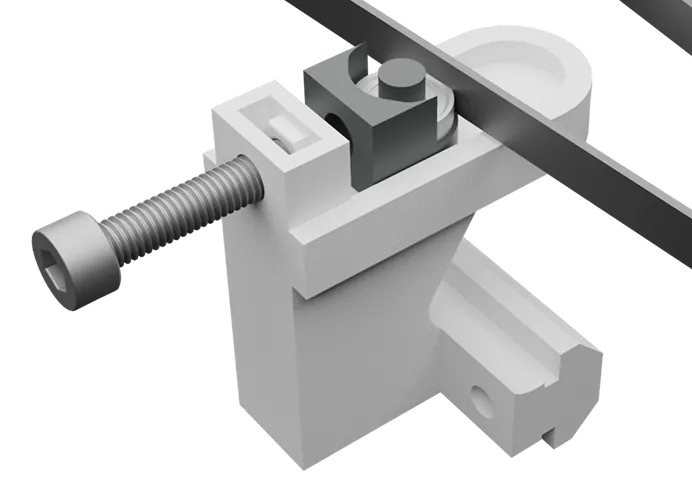
Separate belt tensioners, mounted directly to the aluminium structure, let belt tension be adjusted during assembly. This keeps the GT2 timing belts taut for accurate, low-backlash movement, without needing to replace or re-route the belt itself if tension drifts over time.
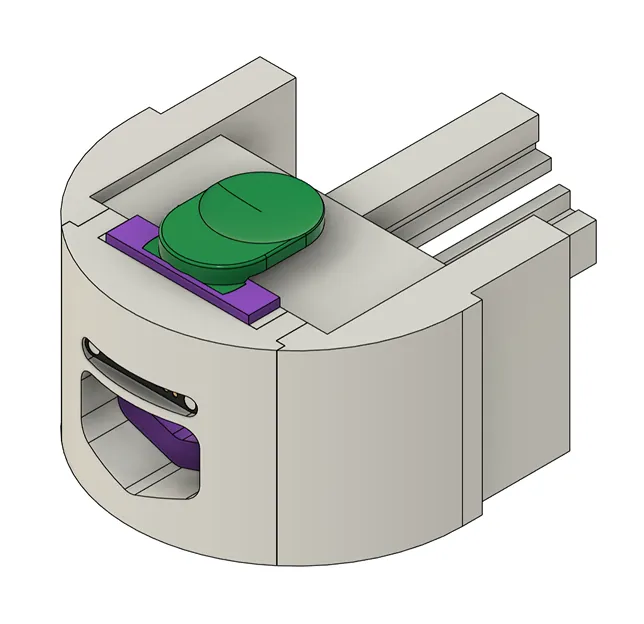
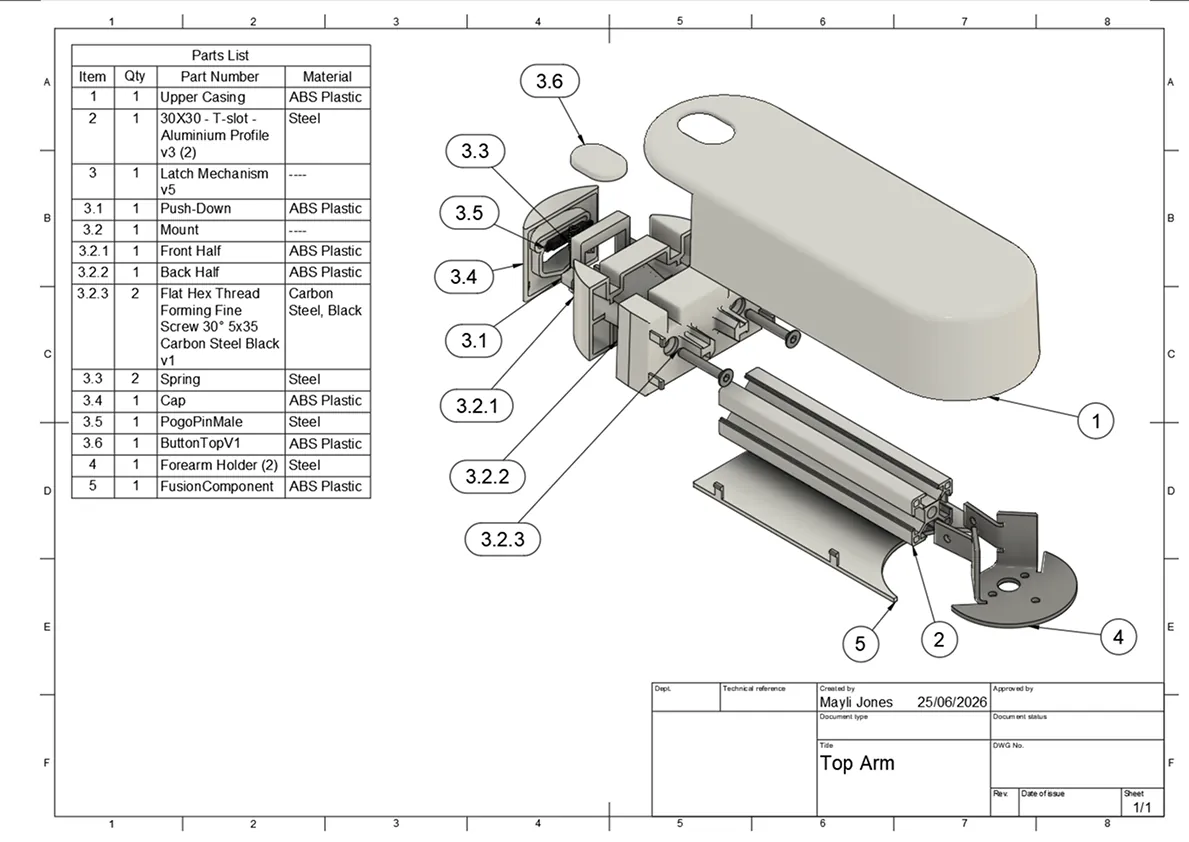
The final head connection uses a spring-loaded push-button latch, chosen after testing snap-fits, buckles and twist-locks. As a head is inserted into the arm, its locking feature pushes past an internal catch, and springs return the catch into position, locking it automatically. Pressing the button on top retracts the catch and releases the head, letting it slide out, no tools needed to swap between tracing and cutting heads.
Packaging
Packaging was designed to reflect what SwivelCut actually is, a cardboard-cutting tool, so the packaging itself is entirely cardboard and paper-based. Inspired by the minimal, functional packaging of Bambu Lab’s own A1 printer, the box uses folded and interlocking card with minimal adhesives or staples, making it easy to separate, reuse and recycle.
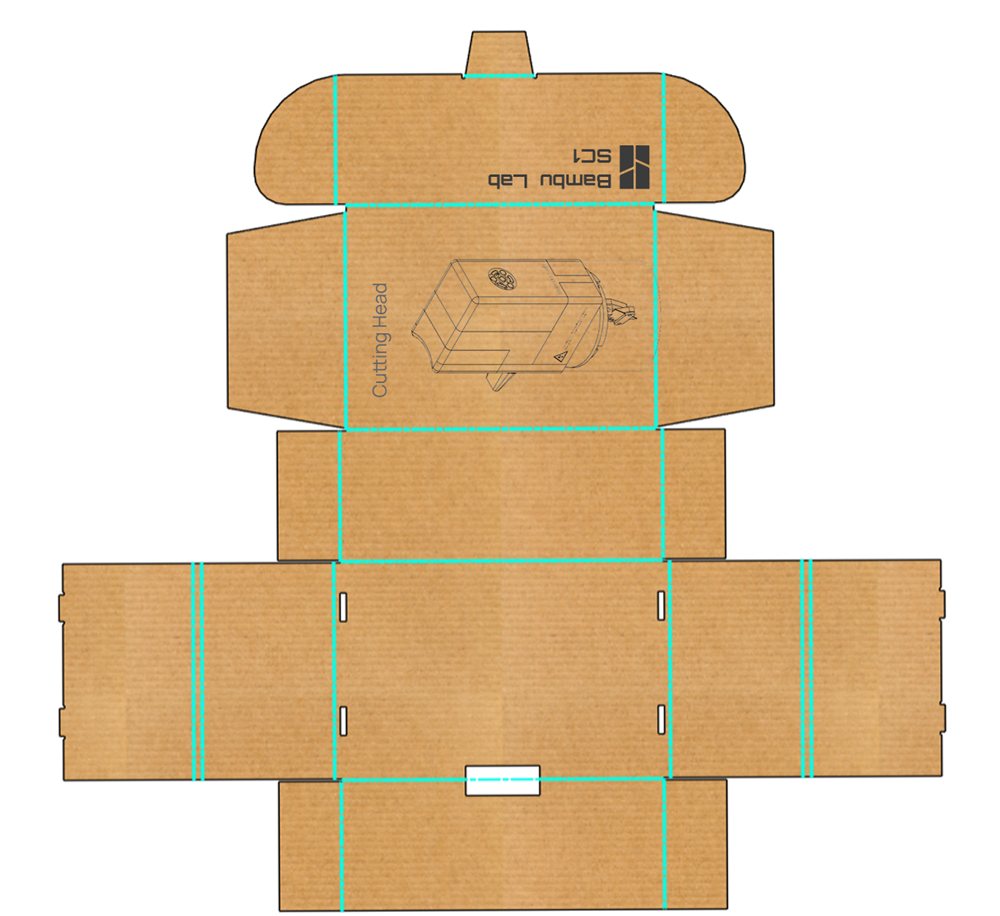
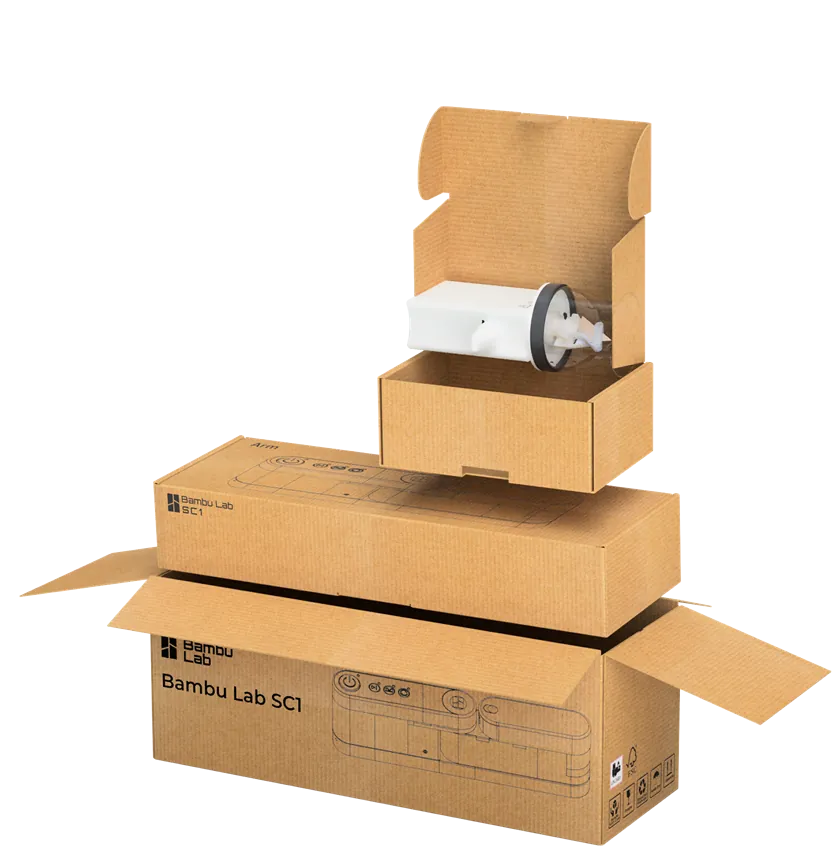
Each component gets its own shaped cardboard insert, cut directly from the same die-line system used to manufacture the boxes. Rather than using foam or plastic protection, the inserts fold to hold each part securely during shipping.
Once unpacked, most of the packaging can be reused by students as modelling material rather than becoming immediate waste, a more environmentally responsible alternative to plastic bags and polystyrene inserts, and one that fits directly into SwivelCut’s own purpose as a prototyping tool. The included test sheet doubles as a first project: trace the printed template, record the movement, attach the cutting head, and make the first cut, giving teachers a built-in setup test while demonstrating the product immediately.
Design for Manufacture & Assembly
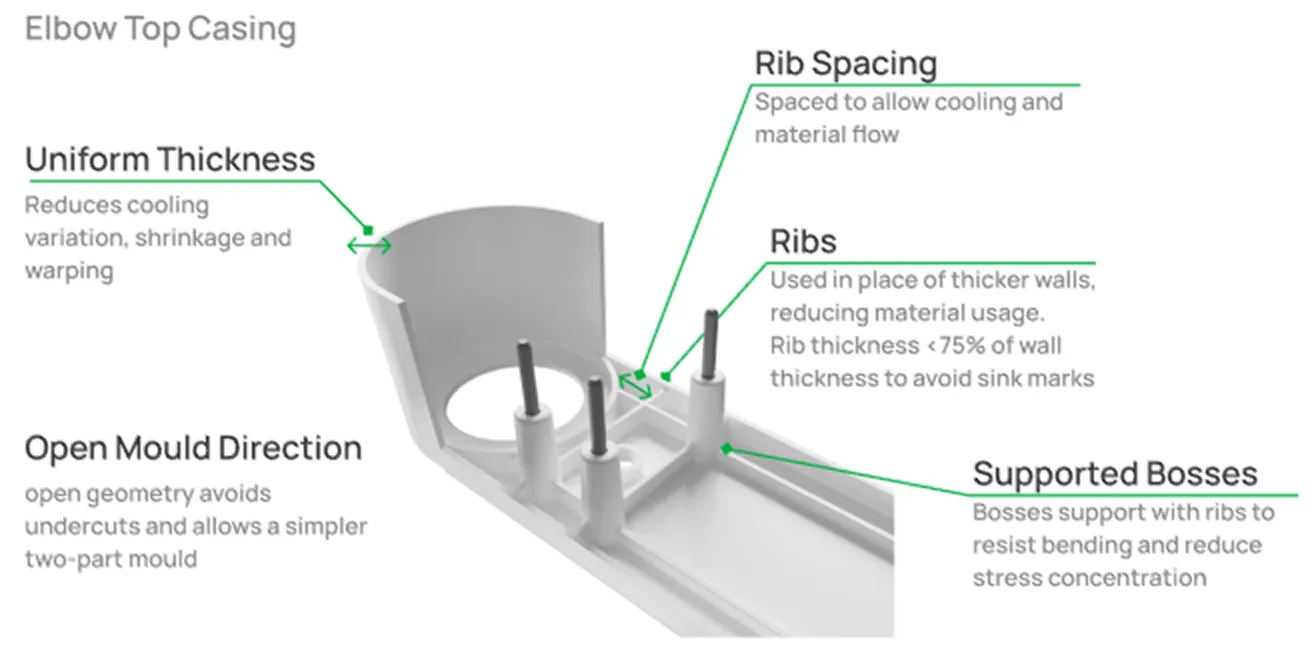
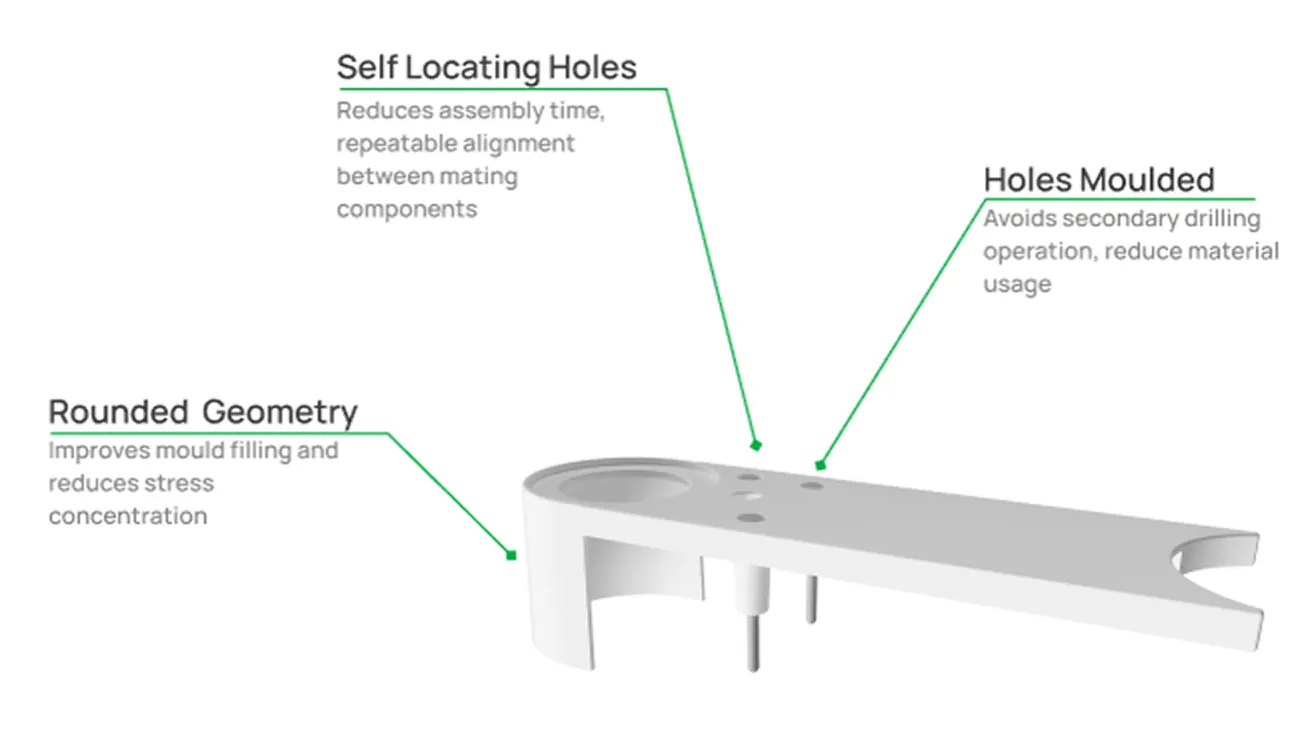
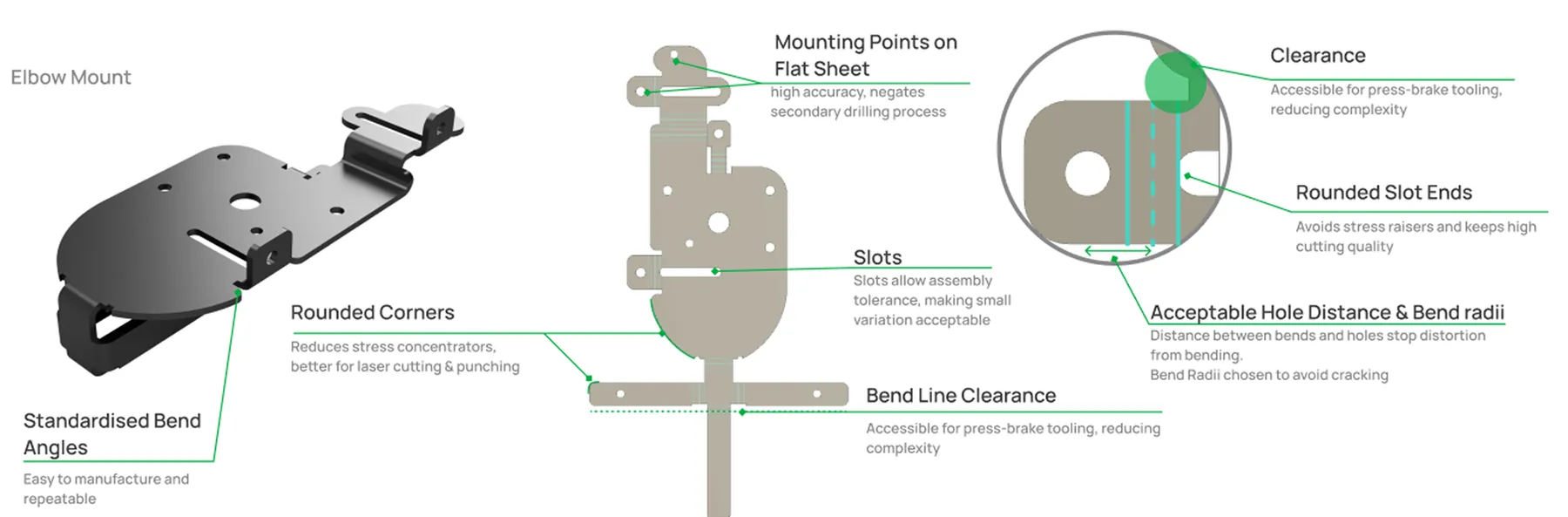
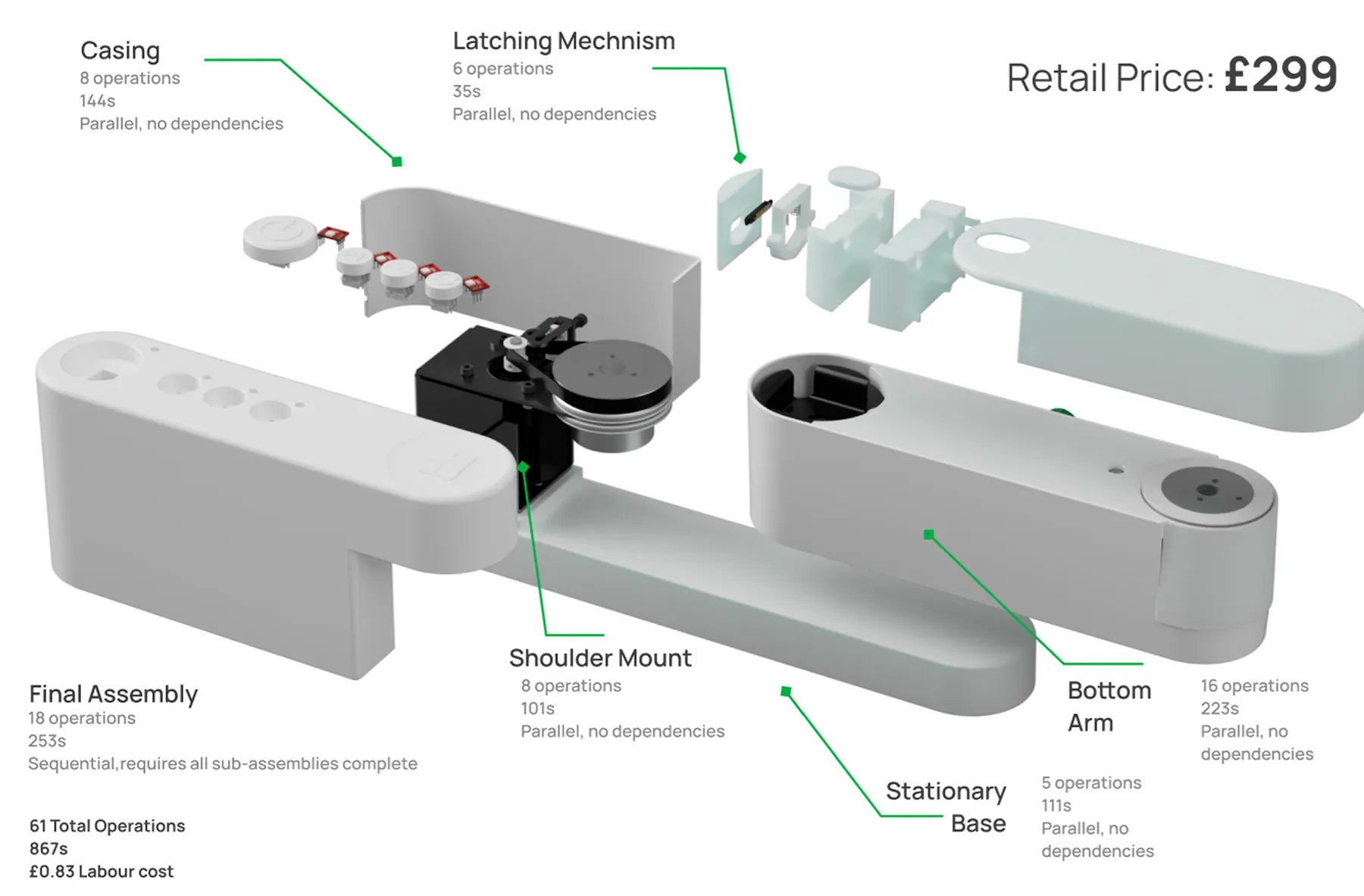
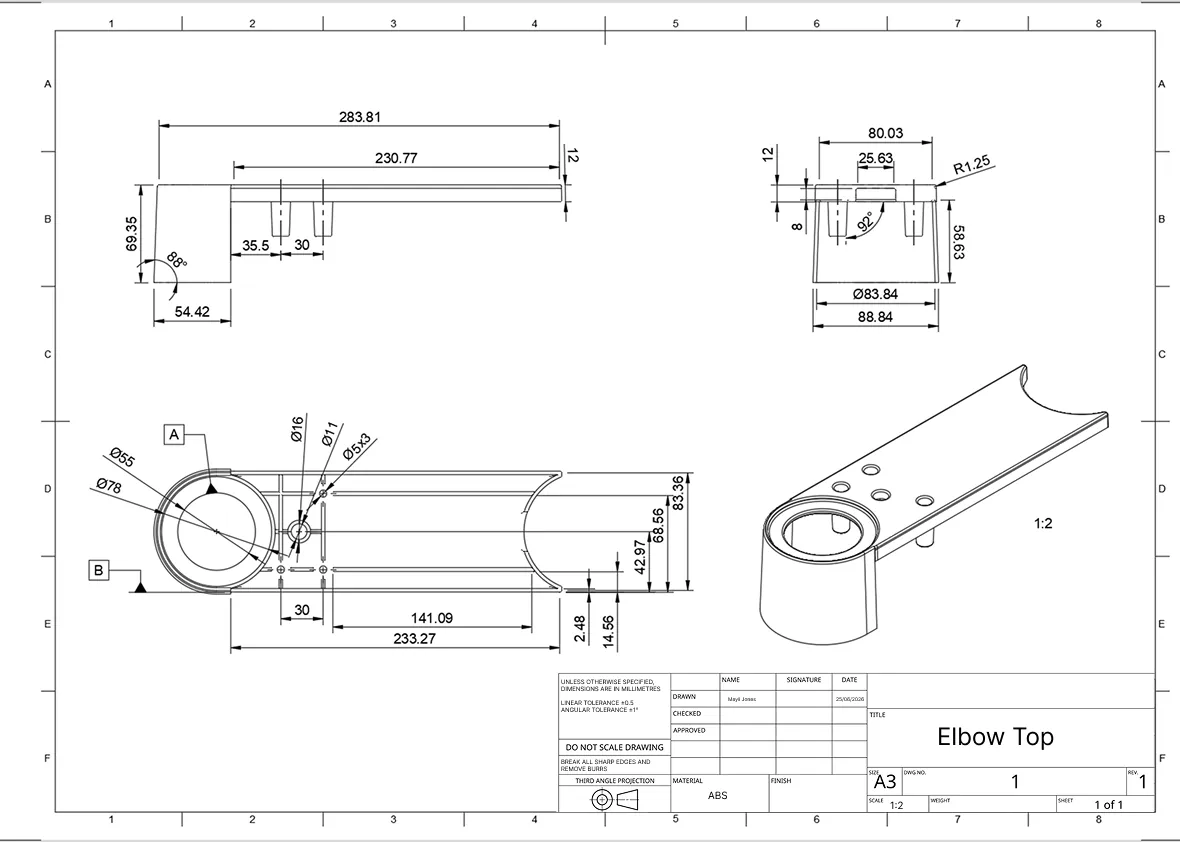
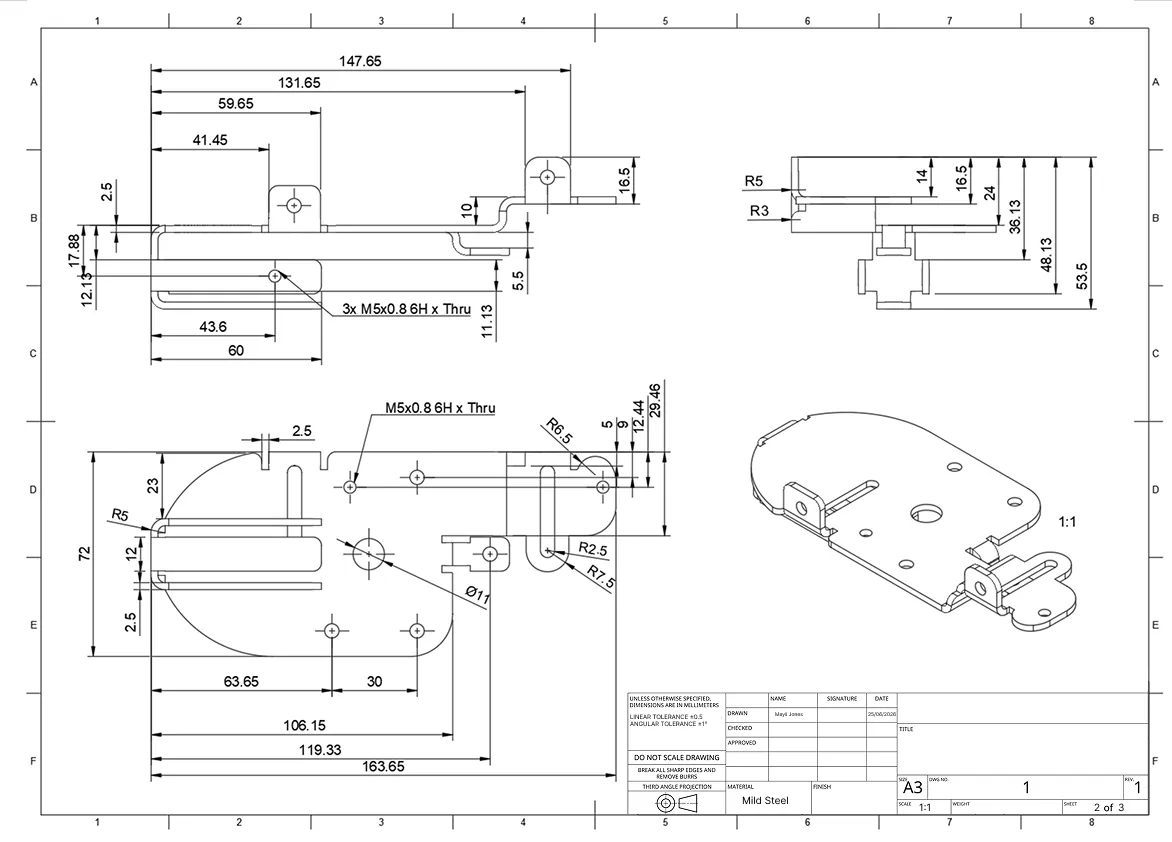
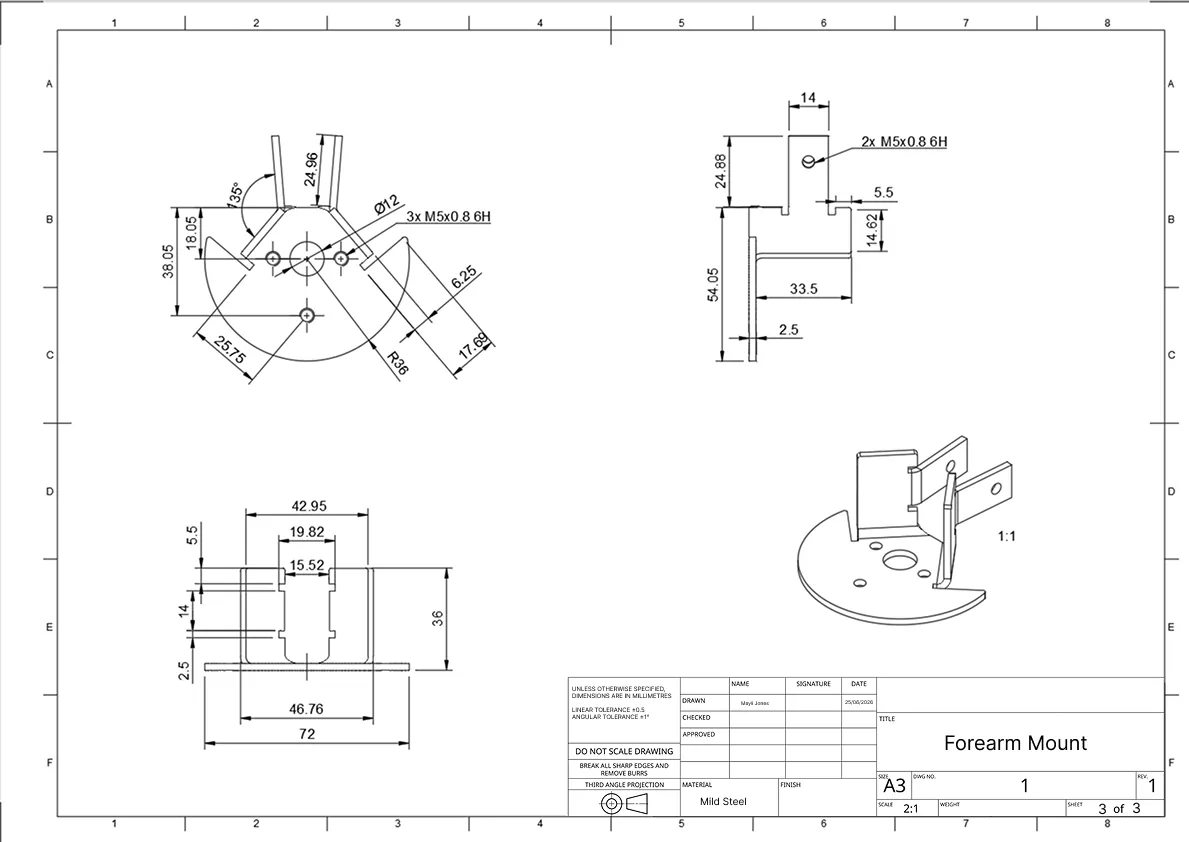
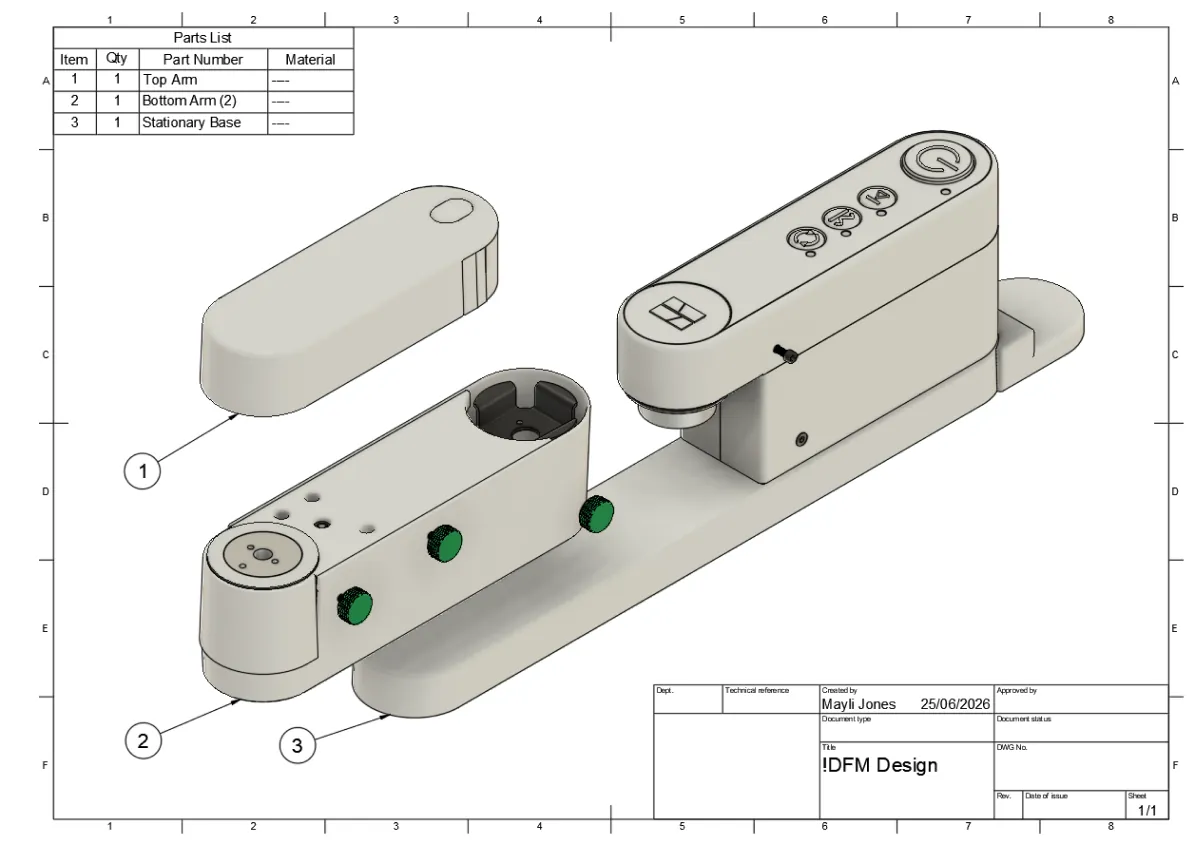
Manufacturing decisions were driven by an estimated production volume of 5,000 units. Materials were selected using Ashby plots in Granta CES EduPack: ABS for casings and brackets, aluminium for structural extrusion and pulleys, and mild steel for load-bearing brackets. The product was designed around five independent sub-assemblies built concurrently rather than in a single sequential process, reducing total build time, and assembles with just two tools and no adhesives.
Across 61 total operations, assembly takes approximately 867 seconds and costs an estimated £0.83 in labour per unit, supporting a target retail price of £299.
- 61total operations
- 867stotal assembly time
- £0.83labour cost per unit
- £299target retail price
User Testing & Validation
- 18students tested at City of London School for Girls
- 7–13year groups tested, from Year 7 to Year 13
- 2days of final testing
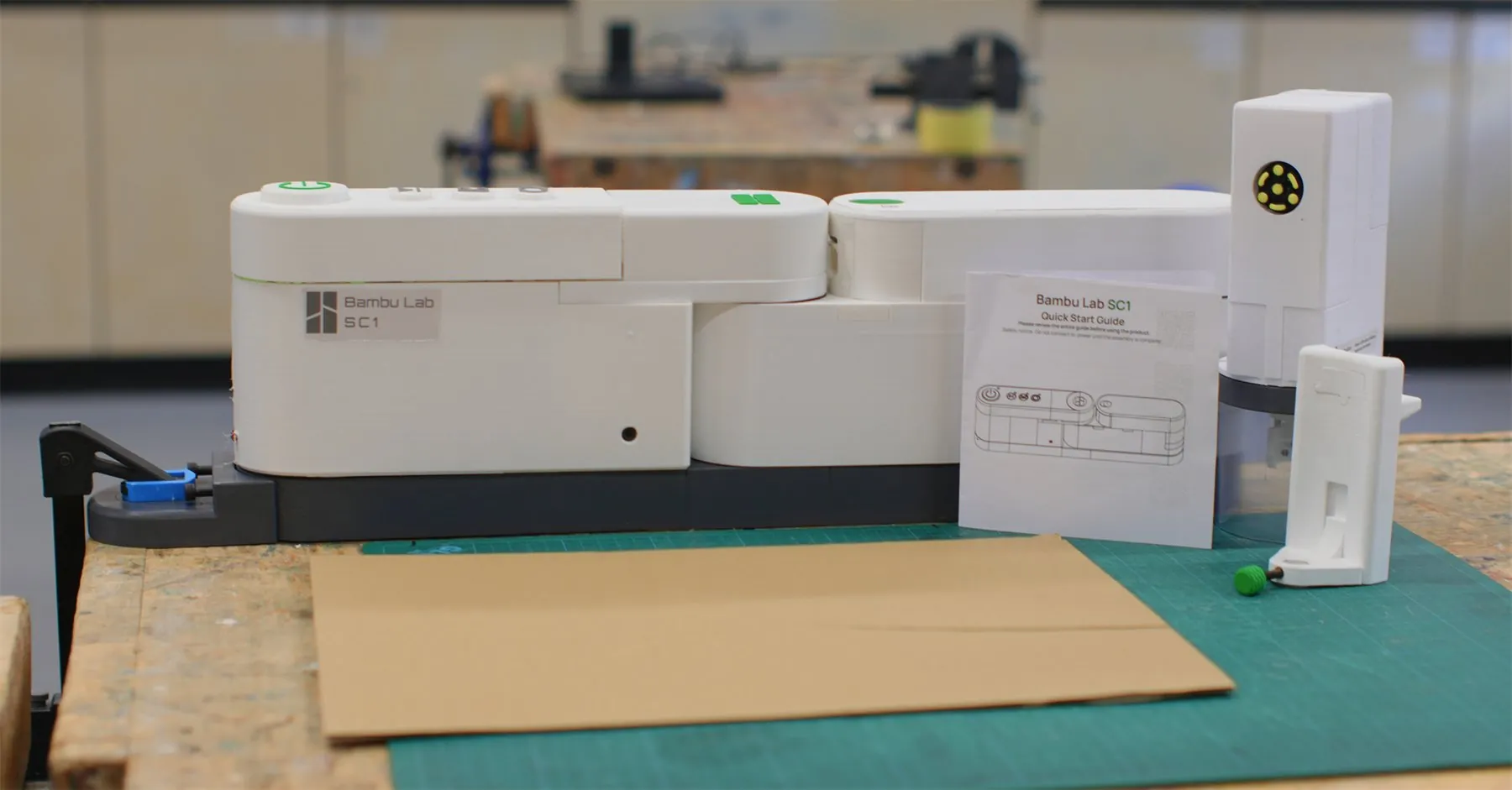
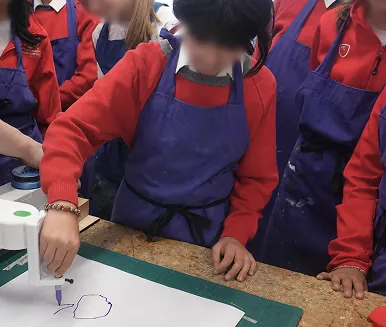
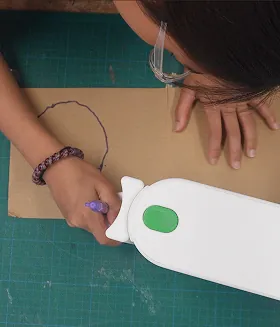
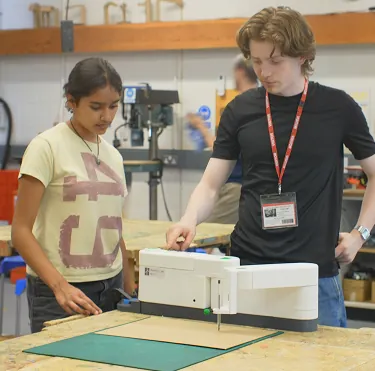
Final testing took place over two days with 18 students from Years 7–13. Students found the head-swapping mechanism immediately intuitive, though coordinating both arm joints while tracing had a short learning curve, but by the end of the task, students were confidently manipulating the arms. Clamping created the most uncertainty, with several students needing reassurance the product was securely fastened, a clearly marked clamping zone was identified as an improvement for the next iteration. The DT teacher said he'd be confident allowing normal classroom use after a brief demonstration, and considered the £299 price point reasonable.
User Guide
